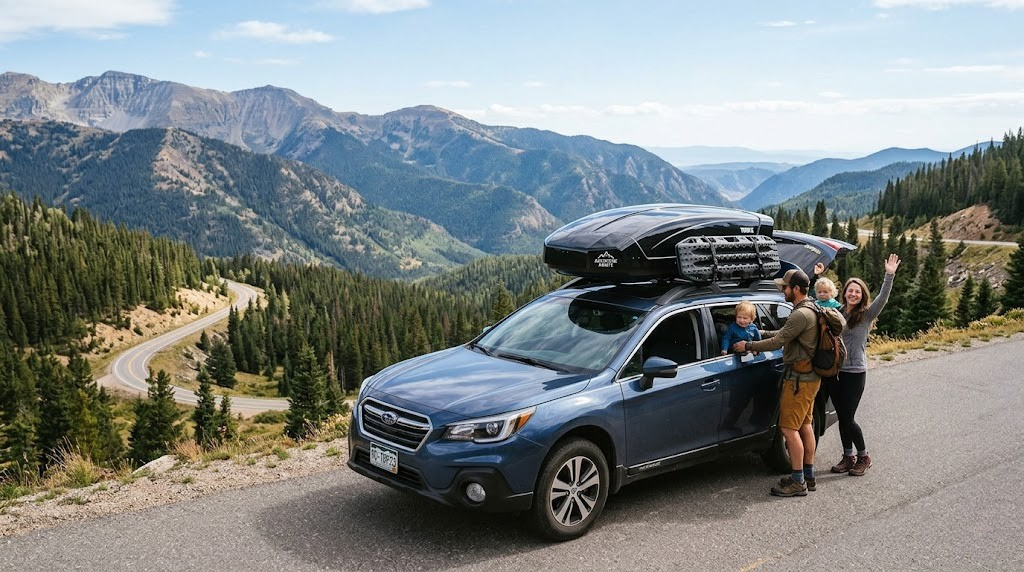
The Definitive Guide to the Best Car Roof Storage
Whether you’re planning an epic cross-country road trip, heading to the mountains with skis, or just need to reclaim your car’s interior from the chaos of family life, car roof storage is a game-changer. But the market is flooded with options: rigid cargo boxes, flexible bags, and rugged baskets. Choosing the right one can feel overwhelming. As an automotive gear expert who has tested countless setups, I’m here to demystify the process and guide you to the perfect solution for your vehicle and your adventures.
First, Do You Need a Box, a Bag, or a Basket?
This is the fundamental question. Your choice will impact security, weather resistance, and storage flexibility. Let’s break down the pros and cons of each.
| Feature | Hard-Shell Cargo Box | Soft-Sided Cargo Bag | Open Cargo Basket |
|---|---|---|---|
| Best For | All-weather security, long-distance travel, carrying skis/snowboards. | Occasional use, bulky/oddly-shaped gear, budget-conscious buyers. | Overlanding, carrying rugged/oversized gear (coolers, spare tires). |
| Security | Excellent (Hard shell, integrated locks) | Low (Fabric, often requires separate padlock) | Low (Open design, relies on nets/straps) |
| Weather Resistance | Excellent (Fully waterproof and weatherproof) | Good to Very Good (Weather-resistant, not always 100% waterproof) | Poor (Gear is exposed to elements) |
| Aerodynamics | Best (Designed to reduce drag and wind noise) | Fair (Can be noisy if not fully packed) | Poor (Creates significant wind resistance) |
| Storage When Not in Use | Difficult (Large, bulky, requires garage/wall space) | Excellent (Folds down into a small bag) | Fair (Relatively flat, but still large) |
| Price | High | Low | Medium |
Expert Advice on Making the Right Choice
In my experience, new families and casual travelers get the most value from a high-quality soft-sided bag. They are affordable, versatile, and easy to store. However, if you are a serious skier, a frequent road-tripper, or carry valuable gear, investing in a hard-shell cargo box is absolutely worth it for the security, weather protection, and peace of mind.
Key Factors to Consider Before You Buy
Beyond the type, you need to match the storage to your specific vehicle and needs. Don’t overlook these details.
- Vehicle Compatibility & Roof Rack System: Does your car have factory-installed side rails, raised rails, or a bare roof? Most roof storage requires crossbars. Ensure the mounting hardware of your chosen carrier is compatible with your crossbar shape (square, round, aero/elliptical).
- Capacity (Cubic Feet vs. Dimensions): Don’t just look at the cubic feet (liters). Check the interior length, width, and height. If you need to carry skis, you’ll need a long, narrow box. If you’re hauling bulky camping gear, a shorter, taller box might be better.
- Hatch Clearance: This is a critical, often-forgotten measurement. Ensure the rear of the cargo box won’t interfere with your trunk or hatchback when it’s fully open. Most manufacturers provide a “hatch clearance” measurement.
- Weight Limits: Your vehicle’s roof, your rack system, and the cargo carrier itself all have maximum weight limits. You must know all three and never exceed the lowest one. Remember to add the weight of the carrier itself to your cargo weight.
Top-Rated Car Roof Storage: Expert Picks
After extensive research and testing, here are my top recommendations available on Amazon, covering every category and budget.

Thule Motion XT XL – Best Overall
The Thule Motion XT is the gold standard. Its SlideLock system with separate locking and opening functions is brilliant, and the PowerClick mounting system is incredibly fast and secure. It offers fantastic aerodynamics, dual-side opening for easy access, and a generous 18 cubic feet of space. It’s the best all-rounder for serious travelers.
Check Price on Amazon
Yakima SkyBox 16 Carbonite – Best Value
Yakima delivers premium features without the absolute premium price. The SkyBox 16 offers 16 cubic feet of storage, a stiff, easy-to-open lid, and tool-free installation. The carbonite texture hides scuffs and scratches better than glossy finishes, making it a durable workhorse. An outstanding value for families and adventurers.
Check Price on Amazon
Fivklemnz 21 Cubic ft Waterproof Bag – Best Cargo Bag
This bag is a fan favorite for a reason. Made from 600D heavy-duty PVC fabric with welded seams and a waterproof zipper flap, it offers genuine protection from the elements. It provides a massive 21 cubic feet of storage and can be used on cars with or without a roof rack, making it incredibly versatile. It includes an anti-slip mat for added security.
Check Price on Amazon
Yakima OffGrid Cargo Basket – Best Basket
For those who need to haul bulky, rugged gear, the OffGrid is king. Its heavy-duty steel construction is bombproof. The tool-free mounting hardware is fully adjustable and fits most crossbars. The included fairing helps reduce wind noise. It’s perfect for coolers, firewood, or a spare tire, freeing up your interior for cleaner cargo.
Check Price on AmazonInstallation Guide: How to Mount Your Roof Storage Safely
Buying the right carrier is only half the job. A roof storage unit that isn’t installed correctly is a genuine hazard—to you, to other drivers, and to any pedestrians or cyclists nearby. Every year, improperly secured roof cargo is responsible for road debris incidents and accidents. This installation guide covers the key steps for hard-shell boxes, soft bags, and cargo baskets so you can drive away with complete confidence.
⚠️ Critical Safety Warning Before You Begin
Before mounting any rooftop carrier, confirm three numbers: (1) your vehicle’s dynamic roof load rating (found in your owner’s manual), (2) your roof rack’s maximum load rating, and (3) the carrier’s maximum load capacity. You must never exceed the lowest of these three numbers, including the weight of the carrier itself. Exceeding this limit risks roof damage, rack failure, and potentially catastrophic loss of the carrier at highway speed. When in doubt, consult a professional installer.
Step 1: Verify Crossbar Compatibility
Almost every hard-shell cargo box and cargo basket attaches to your vehicle via crossbars. Modern crossbars come in four main shapes: round, square, aero/elliptical, and factory-style flush rails. Your carrier’s mounting hardware must be compatible with your crossbar type. Premium brands like Thule and Yakima sell universal mounting kits that accommodate multiple crossbar shapes, which is why investing in a quality carrier often saves headaches down the line. If you’re starting from a bare roof, you’ll need a full roof rack system — side rails, towers, and crossbars — before any cargo carrier can be fitted.
Step 2: Position the Carrier Correctly
Placement matters enormously. The general rule for hard-shell boxes is to position the box as far forward on the crossbars as possible without impeding sunroof or moonroof operation. This lowers the center of gravity relative to the car’s roof line and improves aerodynamics. For most vehicles, the box should overhang the windshield slightly at the front and not extend past the rear hatch opening. Check the hatch clearance by opening your trunk fully with the box in position — you should have at least 2 inches of clearance between the rear of the box and the fully-open hatch.
Step 3: Tighten the Mounting Hardware
Every cargo carrier uses a different system, but the principle is consistent: all mounting clamps must make firm, even contact with the crossbar, and must be tightened enough that the carrier cannot rotate, shift, or lift at highway speed. For torque-sensitive systems like Thule’s PowerClick, you’ll hear a distinct click when the correct torque is reached. For manual systems, tighten until firmly snug — overtightening can crack the crossbar’s plastic end caps or damage aero-profile bars. After tightening, attempt to rock the carrier firmly in all directions. There should be zero movement.
Step 4: Load Correctly for Balance and Safety
How you distribute weight inside the carrier affects your car’s handling. Follow these principles: place heavier items as low and as central as possible within the carrier, toward the front of the box (over the front crossbar). Keep lighter, bulkier items at the back and sides. Never load all the weight to one side. Avoid packing items that could shift during cornering or braking — use a cargo net or packing cubes inside the box. Never exceed the carrier’s maximum weight rating even if it feels sturdy enough to handle more.
Step 5: Verify Before Every Trip
After the first 5–10 miles of driving, pull over and re-check all mounting hardware. Vibration and road irregularities can cause bolts and clamps to loosen slightly after initial use. This is standard practice and something professional installers always recommend. After that initial check, verify the tightness of your mounting hardware before every subsequent trip, especially after driving on rough roads or after loading/unloading.
✅ Pre-Departure Roof Carrier Checklist
- All mounting clamps are fully tightened with zero carrier movement
- Carrier lid or top is fully closed and latched/locked
- Weight does not exceed the lowest of the three weight limits
- Heavy items are positioned low, central, and forward
- Nothing is hanging outside or overhanging beyond the carrier’s footprint
- Hatch/trunk clears the rear of the carrier when fully open
- Soft bag straps or cargo net are all secured and tucked away
- You’ve mentally noted the new vehicle height (critical for multi-story car parks and drive-throughs)
Roof Storage for Every Type of Road Tripper
There is no single “best” roof storage solution — the right choice depends entirely on how you travel, where you go, and what you carry. Below is a scenario-based guide to help you identify your profile and match it to the right carrier type.
🏕️ The Family Camper
Best pick: Hard-shell box (18+ cu ft)
You’re hauling sleeping bags, tents, pillows, and clothing for a family of four. You need maximum volume, complete weather protection, and security for expensive camping gear. The Thule Motion XT XL or a comparable 18+ cubic foot box is your answer. The dual-side opening is a lifesaver when loading in tight campsites.
⛷️ The Ski/Snowboard Tripper
Best pick: Dedicated ski box
Standard cargo boxes don’t fit skis — you need a ski-specific box designed with a long, narrow interior. Most accommodate 4–6 pairs of skis or 2–4 snowboards. Look for internal ski cradles to prevent equipment damage. Adding a quality dash cam is also wise for mountain road driving.
🚐 The Weekend Warrior
Best pick: Cargo bag
You use roof storage 4–6 times a year and don’t want to pay for or store a hard box. A quality cargo bag like the Fivklemnz gives you excellent capacity, good weather resistance, and stores flat under a bed when not in use. It’s the high-value, low-commitment option.
🛻 The Overlander
Best pick: Cargo basket
You need to carry a spare tire, recovery boards, jerry cans, or a rooftop tent base. An open basket is the only practical solution for bulky, non-standard-shaped gear. Pair it with quality tie-down straps and a cargo net for security. Safe recovery starts with proper driving techniques too — our safe driving habits guide is worth revisiting.
🏙️ The Urban Occasional User
Best pick: Small/mid cargo bag or hitch-mount carrier
You live in the city, have limited garage space, and primarily need extra capacity for annual holiday travel. A mid-size cargo bag (15–17 cu ft) is perfect — no installation headaches, stores in a closet, and handles the job brilliantly 2–3 times a year.
🐕 The Dog Parent
Best pick: Hard-shell box + interior car organization
If your dog rides in the back seat, you need the boot for their gear. A medium cargo box gives you back your interior without sacrificing the boot space your dog needs. Check our tips on safe car rides with dogs to make the whole trip more comfortable for everyone.
Driving Safely With Roof Storage: What Most People Don’t Know
Adding a loaded roof carrier fundamentally changes how your car drives. The physics are simple but important: you’ve raised the vehicle’s center of gravity, increased aerodynamic drag, added significant weight, and extended the vehicle’s dimensions. Ignoring these changes is how accidents happen. Here’s what you need to know before you pull out of the driveway.
How Roof Cargo Affects Vehicle Handling
Every kilogram of weight on your roof has a disproportionate effect on handling compared to the same weight inside the vehicle. A 50 kg load on the roof shifts the center of gravity upward by a meaningful amount, which increases body roll in corners and raises rollover risk in emergency maneuvers. The practical implication: reduce your cornering speed by 10–15% compared to normal driving, and increase following distances to account for the increased braking distance caused by the additional weight. These are not suggestions — they are physical realities.
Wind and Highway Driving
At highway speeds, a cargo carrier introduces significant aerodynamic forces. A cargo basket or improperly packed soft bag can create lateral instability in strong crosswinds. On exposed highway sections, bridges, or mountain passes, be prepared for the steering to feel heavier and less precise. Reduce speed in strong crosswind conditions and maintain a firm, two-handed grip on the wheel. Our in-depth guide to driving in high winds without losing control covers all the techniques you need — doubly important when carrying roof cargo.
The Height Problem: The Most Dangerous Oversight
This is the leading cause of roof cargo-related incidents: drivers forgetting about their new vehicle height. A standard roof cargo box adds 12–18 inches to your vehicle’s height. A cargo basket can add 6–12 inches. Many multi-story car parks have height restrictions between 6’6″ and 7’0″. A vehicle that clears these barriers normally will not clear them with a fully loaded roof box. Drive-through restaurants, garage entrances, low bridges, covered petrol stations, and car wash bays are all potential hazards.
The solution is simple but must be actively practiced: stick a note on your dashboard or steering wheel reminder with your new approximate vehicle height every time the carrier is loaded. Set a calendar reminder to remove it when the carrier comes off. This single habit prevents the vast majority of height-related incidents.
Fuel Economy: What to Realistically Expect
Any rooftop carrier reduces fuel economy due to increased aerodynamic drag. The extent varies dramatically by carrier type. An aerodynamic hard-shell box from Thule or Yakima will reduce highway fuel economy by approximately 8–15% at motorway speeds. A cargo basket or improperly packed soft bag can reduce it by 20–25% or more. At current fuel prices, this is a meaningful cost on a long road trip. To minimize fuel impact: choose the most aerodynamic carrier that meets your needs, remove the carrier when not in use, keep it packed full (a half-empty bag creates more drag), and reduce highway speed by 5–10 mph where practical.
Maintenance and Long-Term Care of Your Roof Carrier
A quality hard-shell cargo box represents a significant investment — the Thule Motion XT XL, for example, is a $600+ purchase. Proper maintenance will extend its life from a few years to a decade or more. These simple habits make all the difference.
Cleaning Your Hard-Shell Box
After every trip, especially trips through rain, mud, or road salt (winter driving), clean your cargo box with mild soap and warm water. Road salt is particularly corrosive and will attack the plastic over time if left. Avoid pressure washers on the mounting hardware and lock cylinders. Once or twice a year, apply a UV-protective plastic treatment (303 Aerospace Protectant is the industry standard) to the exterior shell. This prevents the plastic from oxidising, fading, and becoming brittle under UV exposure — the primary cause of premature aging in roof boxes.
Lubricating Locks and Hinges
Lock cylinders on roof boxes are exposed to dirt, grit, and moisture in a way that standard locks are not. Lubricate them twice a year with a PTFE-based dry lubricant or specialist lock lubricant. Never use WD-40 on lock cylinders — it attracts dust and gum up the mechanism over time. Hinge points on the lid should also receive a light application of a silicone-based lubricant annually to prevent squeaking and corrosion.
Caring for a Cargo Bag
After each use, empty the bag completely and allow it to air dry before folding and storing. Any moisture trapped in a folded bag will develop mildew that degrades the waterproof PVC coating over time. Store the bag in a cool, dry place away from direct sunlight — UV exposure breaks down even heavy-duty PVC. Inspect the waterproof zipper flap and all seams annually; reapply seam sealer if any delamination appears. The straps that pass through the car interior should be inspected for fraying or wear before every use.
Inspecting Mounting Hardware
Before every season, inspect all mounting clamps, bolts, and mounting plates for signs of corrosion, cracking, or deformation. Replace any hardware that shows even minor damage — this is life-safety equipment. If your carrier uses torque-indicating hardware, verify the torque settings haven’t drifted by periodically re-checking them after long trips. Keep a record of when you last inspected and replaced hardware components.
💡 Pro Maintenance Tip
When you remove your cargo box for storage at the end of the season, store it with the lid slightly ajar rather than fully latched. This prevents the rubber lid seal from compressing into a permanent set, which over time leads to leaks. A piece of folded cardboard inserted in the seal gap achieves the same result while keeping the box clean inside. This single habit dramatically extends the life of the lid seal.
The Complete Road Trip Planning Toolkit
Your roof carrier is loaded, your car is ready, and the open road is calling. But great road trips don’t happen by accident — they’re built on preparation. Whether you’re heading across the country or taking a weekend escape, these resources will help you plan, pack, and drive with confidence.
Planning Your Route and Itinerary
The foundation of any great road trip is a solid plan — one that’s structured enough to ensure you hit your key stops but flexible enough to allow for spontaneous detours. Many first-time road trippers over-plan their days and under-plan their fuel, rest, and contingency stops. A good route plan accounts for realistic driving times (not GPS “ideal” times), fuel stops every 200–250 miles as a default, planned meal breaks to fight fatigue, and at least one “buffer” day for any multi-day trip. Our complete 7-step trip planning checklist walks through every element of this process.
- Road Trip Essentials Checklist — Everything you need to pack for a great trip
- How to Eliminate Road Trip Risks Before Departure — Safety prep from bumper to bumper
- Safe Road Trip Essentials by Scenario — Tailored packs for different trip types
- Preparing Your Car: Full Safety Check Guide — Vehicle inspection before you leave
- Apps Every Driver Should Have — From navigation to emergency assistance
Building Your Emergency Safety Kit
A loaded roof carrier can create a false sense of preparedness — you have all your gear, after all. But your emergency kit is separate from your road trip supplies, and it lives in the car, not on the roof. Every vehicle on a road trip should carry a properly stocked emergency kit capable of handling the most common roadside scenarios: a flat tire, a dead battery, a minor accident, and an unexpected overnight delay.
The essentials include a quality jump starter (our guide to how many amps your jump starter needs helps you choose the right one for your engine size), a tire inflator (our tire inflator buying guide explains the key specs), and high-visibility road flares (we recommend LED road flares that are crushproof and waterproof for maximum reliability). Rounding it out: a first aid kit, emergency mylar blanket, a magnetic base flashlight for hands-free tire changes, a car fire extinguisher (Class B/C, correctly mounted), and an emergency escape tool with seatbelt cutter.
Our definitive guide to building a complete car safety kit covers every item in depth, with specific product recommendations for each category.
Keeping Your Car in Top Condition on the Road
Long road trips are stress tests for vehicles. Extended highway driving raises engine temperatures, puts sustained load on tires, and depletes fluids faster than urban use. Before leaving, check (or have checked): engine oil level and quality, coolant level, brake fluid, tyre pressure (including the spare), all lights, windscreen wipers, and battery health. The easiest way to diagnose any underlying issues before they become roadside emergencies is an OBD2 scanner — our guide to OBD2 scan tools and real-time sensor monitoring explains how to use one effectively, even if you have no mechanical background.
Advanced Roof Storage: Overlanding, Ski Trips, and Specialty Setups
Most roof storage guides stop at “which box should I buy?” But for serious adventurers, the rooftop setup is just one part of a broader vehicle outfitting picture. This section goes deeper for those with specific, demanding use cases.
Building an Overlanding Roof Setup
Overlanding — self-sufficient, off-road vehicle-based travel — has specific roof storage demands that mainstream cargo boxes simply cannot meet. The overland community has developed a set of best practices around roof systems that prioritise modularity, durability, and weight management. A typical overlanding roof setup might include a cargo basket as the foundation, with a rooftop tent mounted to the rear portion (if the rack is rated for it), a light bar or spot lights mounted to the basket’s front fairing mount points, and modular side-release cases strapped to the basket walls for tools and recovery equipment.
The critical constraint in overlanding is weight management. Every component on an off-road vehicle must be intentionally chosen and weighed — the combination of a rooftop tent (30–60 kg), a cargo basket (15–20 kg), and loaded gear (30–50 kg) can put 100+ kg on a roof that may only be rated for 75 kg in dynamic off-road conditions. This is where knowing your dynamic versus static load rating becomes critically important. Always work within your vehicle’s dynamic rating for off-road driving, not the (higher) static rating.
Ski and Snowboard Specific Storage
Ski trips present unique storage challenges. Ski and snowboard equipment is long, heavy, and often wet. Standard cargo boxes typically don’t accommodate full-length skis (160–190 cm). Ski-specific cargo boxes are designed with an elongated, narrow footprint specifically to hold skis flat and dry. They typically include internal cradles that prevent ski edges from damaging the interior. Most quality ski boxes from Thule and Yakima accommodate 4–6 pairs of skis or 2–4 snowboards. If you plan to carry both passengers and skis, verify that the ski box can open on both sides — this avoids the frustrating situation of the box opening away from the car park in a narrow ski resort car park.
For ski trips, road conditions are almost invariably challenging. Loading a heavy ski box adds weight and raises the center of gravity precisely when you need the best possible traction and handling on snowy mountain roads. Before heading to the mountain, review our winter driving and snow traction guide and ensure your tires are genuinely winter-rated, not just all-season. On truly icy mountain approaches, chain requirements may apply — know the rules for your route. If you encounter black ice, our black ice survival guide explains exactly how to react.
Photography and Adventure Travel Setups
Adventure photographers and filmmakers have specific requirements: protecting expensive, fragile equipment from vibration and moisture while keeping it accessible at a moment’s notice. For this use case, a hard-shell cargo box is non-negotiable — the Thule Motion XT or equivalent. Inside the box, use individual Pelican-style cases or custom foam inserts to protect camera bodies, lenses, and drones. Position the cargo box so it opens on the kerb side, reducing the risk of opening it into traffic. A quality action camera for capturing your journey can also be mounted to your vehicle — our DJI Osmo Pocket 3 review covers one of the best compact travel cameras available, while the best 4K dash cam guide covers in-vehicle documentation for safety and content creation.
Frequently Asked Questions: Deep Dive Answers
Will a rooftop cargo carrier hurt my gas mileage?
Yes, any rooftop storage will decrease fuel efficiency due to increased aerodynamic drag. Hard-shell cargo boxes, especially those with sleek, tapered designs like the Thule Motion XT series, have the least impact — typically 8–15% on highway fuel economy at motorway speeds. Cargo bags that aren’t fully packed can flap and create disproportionate drag. Cargo baskets are the worst offenders, potentially reducing highway fuel economy by 20–25% or more when loaded. The most effective way to manage fuel impact is to remove the carrier entirely when not in use. Even an empty cargo box adds enough drag to cost you meaningfully over time.
Can I use a car roof storage box without a roof rack?
Generally, no. Hard-shell boxes and cargo baskets require a roof rack system with crossbars for secure mounting. These crossbars are load-bearing components and are not optional. However, many soft-sided cargo bags are specifically designed to be used on vehicles without a rack — they use straps that pass through the car doors and cinch tightly around the vehicle. This is acceptable for occasional, lower-speed use, but the security is significantly less than a rack-mounted system, and you should never use strap-through bags on highways at sustained high speed without verifying the manufacturer’s maximum speed rating for strapless installation.
Are car roof cargo carriers noisy?
They can be, but the situation has improved enormously in recent years. Aerodynamic hard-shell boxes from brands like Thule and Yakima are engineered with wind-cheating profiles and often include adjustable front deflectors that can be tuned to virtually eliminate wind whistle at highway speeds. Cargo baskets typically come with a front fairing that deflects the leading edge of airflow over the basket, dramatically reducing noise. Soft bags are quietest when packed absolutely full — a half-empty soft bag can create significant flutter noise at highway speeds. If your carrier creates excessive wind noise, first check that all mounting hardware is tight and the carrier is properly positioned on the crossbars.
What is the maximum speed I should drive with a roof carrier?
Always check your specific carrier and rack manufacturer’s speed rating. Most quality roof carriers are rated to highway speeds (70–80 mph / 110–130 km/h). However, this rating assumes the carrier is properly installed, properly loaded within weight limits, and that all hardware is tight. In practice, reducing your highway speed by 5–10 mph compared to your normal speed both improves fuel economy and reduces aerodynamic forces on the carrier and mounting hardware, extending the service life of both.
How do I prevent theft from my cargo box?
Quality hard-shell cargo boxes from Thule, Yakima, and similar brands include integrated lock cylinders that lock the lid shut. These are a meaningful deterrent for opportunistic thieves. However, the box is only as secure as the lock on the crossbar mounting — most quality carriers also include locks or security cables that prevent the entire carrier from being lifted off the rack. For high-value gear (electronics, skiing equipment), never leave the carrier unattended for extended periods in public places, and consider a secondary cable lock through the handle of the box as an additional deterrent.
How do I clean the inside of my cargo box after it gets dirty?
Wet camping gear, boots, and outdoor equipment will inevitably introduce dirt and moisture into your cargo box. After each trip, empty the box completely and use a garden hose or damp cloth to remove any grit or debris from the interior. Leave the box open to air dry completely before closing — trapped moisture leads to mildew and, over time, degrades the interior lining. For stubborn stains, a mild all-purpose cleaner applied with a soft brush works well. Avoid bleach products, which can degrade the plastic and rubber seals. The interior of most boxes can be wiped down with a damp microfibre cloth after the initial cleaning for a final finish.
Budget vs. Premium: Is the Price Difference Worth It?
The gap between a budget cargo solution and a premium one is significant — sometimes $400 or more. Is it justified? Here’s an honest breakdown of what you actually get for the premium price, and where the value genuinely lies versus where it doesn’t.
| Feature | Budget (Under $100) | Mid-Range ($100–$250) | Premium ($400+) |
|---|---|---|---|
| Build Material | Thin ABS plastic, basic hinges | Reinforced ABS, quality hardware | High-density ABS/composite, precision hardware |
| Weather Seal | Basic gasket, may let water in | Good seal, weather-resistant | Precision-engineered seal, fully weatherproof |
| Lock System | Basic or no lock | Single lock, standard key | Integrated multi-point lock, SKS key system |
| Opening Side | Single-side only | Single or dual side | Dual-side standard |
| Aerodynamics | Basic box shape, noisy | Improved profile, some noise | Wind-tunnel tested, near-silent |
| Expected Lifespan | 2–4 years | 5–7 years | 10–15+ years |
| Warranty | Limited or none | 1–3 years | Limited lifetime (Thule, Yakima) |
The honest verdict: for casual users who go on 2–4 road trips per year and don’t carry high-value gear, a good mid-range cargo bag (like the Fivklemnz we reviewed above) offers extraordinary value. But if you travel frequently, carry valuable equipment, drive in winter or high-weather-variability conditions, or simply want a solution that will last a decade without incident, the premium hard-shell box pays for itself in longevity and peace of mind alone.
Consider it this way: a $600 Thule Motion XT box used for 10 years costs $60 per year. A $100 budget box replaced every 3 years costs $33 per year — but with significantly higher frustration cost and security risk. Frequent users almost always conclude that the premium purchase is the correct financial decision over any multi-year horizon.
Accessories That Make Your Roof Setup Complete
The carrier itself is just the starting point. The right accessories transform a basic roof storage solution into a properly integrated, efficient system. Here are the additions most worth considering.
Cargo Nets and Interior Organizers
Even the largest cargo box loses half its practical value if gear is shifting around inside it. A cargo net sized to fit the interior of your specific box (most manufacturers sell these as accessories) prevents items from moving in transit, protects fragile items, and makes the process of loading and unloading far more organized. For camping trips, packing cubes that fit neatly into the box allow you to organize clothing, kitchen equipment, and sleeping gear into separate, easily accessible modules.
Roof Box Liner/Mat
The interior floor of most cargo boxes is a hard, textured plastic that can scratch delicate items and allows small items to slide freely. A cut-to-size non-slip liner solves both problems. It protects the contents from abrasion and prevents the constant sliding that adds wear to both your gear and the box’s interior finish over time.
Security Cables and Additional Locks
Even premium cargo boxes with integrated locks can be defeated with enough time and the right tools. A secondary security cable — looped through the box’s handle and around a crossbar — requires a thief to defeat two separate mechanisms, dramatically increasing the time required and the likelihood of detection. For particularly high-value loads, a GPS tracker hidden inside the box adds a final layer of security and recovery capability.
Roof Box Pads and Rack Protectors
Every time you load and unload a heavy cargo box, there’s a risk of scratching or denting your vehicle’s roof. Crossbar pads (foam sleeves that wrap around the bars) cushion impacts during loading and prevent metal-on-metal contact between the carrier’s mounting hardware and the crossbar finish. They also reduce vibration-related noise on longer trips.

About the Author: Alex Carter
Alex Carter is a mechanical engineer and seasoned automotive journalist with over 15 years of experience. He specializes in vehicle modifications and overland gear, having driven and customized vehicles on four continents. His rigorous, hands-on testing provides readers with practical, unbiased advice to help them get the most out of their adventures.
Disclaimer: This post contains affiliate links to Amazon. If you make a purchase through these links, we may earn a small commission at no extra cost to you. We only recommend products we have personally vetted and believe represent the best options for our readers.