
Liu Wen: The Woman Who Changed Everything About Chinese Beauty on the World Stage
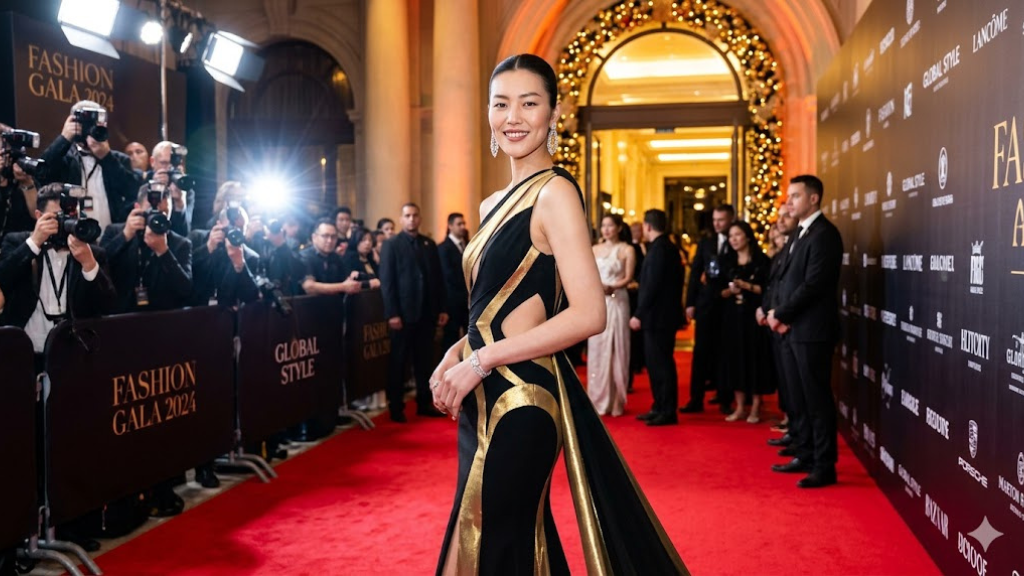
Who Is Liu Wen? China’s Supermodel Pioneer
If you search for the phrase “China’s first supermodel,” every credible source points to the same name: Liu Wen. Over a career spanning nearly two decades, she rewrote what was considered possible for an Asian woman in high fashion — not by making incremental progress, but by crashing through barriers that the industry had spent generations quietly reinforcing.
She is not simply a model who happened to be Chinese. She is a cultural watershed. Before Liu Wen walked onto the Victoria’s Secret runway in 2009, no East Asian model had ever done so. Before she appeared on the covers of Vogue China, Vogue US, and Harper’s Bazaar in the same career, the fashion world still operated with a quietly segregated ladder system that placed Asian models firmly on the lower rungs. Liu Wen changed all of that, not through confrontation, but through undeniable excellence.
Today she is a globally recognized face for brands like L’Oréal Paris, Estée Lauder, H&M, Gap, Chanel, Armani, and dozens more. She sits comfortably among the world’s highest-earning models and has appeared in more than 700 magazine covers and editorial features. In China, she holds near-legendary status. Internationally, she is still quietly underestimated — which, if you understand her story, is exactly the kind of oversight she has built an entire career on correcting.
Early Life: From Yongzhou to the World Stage
Liu Wen was born on January 27, 1988, in Yongzhou — a modest city in Hunan Province in south-central China. Unlike the polished origin stories that fashion publicists love to manufacture, Liu Wen’s background was straightforwardly ordinary: a middle-class family, a provincial city, a childhood without particular connection to fashion or glamour.
She was, by her own accounts, a self-described tomboy during her adolescence. Yongzhou is not the kind of place that produces international supermodels with any regularity. There are no elite modeling academies, no proximity to major fashion capitals, and no local cultural infrastructure that points a teenager toward Paris or New York. That context makes what happened next all the more remarkable.
The Discovery That Changed Her Life
Liu Wen was discovered through a talent competition in her early teens — an entry point that is common enough in Chinese modeling but rarely leads anywhere close to where she ended up. She was tall, naturally, standing several inches above her classmates even in early high school. But height alone doesn’t make a supermodel. What Liu Wen had, from the beginning, was an unusual combination of physical precision and emotional restraint — a quality of stillness on camera that photographers find rare and remarkable.
She began working with regional agencies, moved to Shanghai, and within a few years was being noticed by international scouts. Her early Shanghai editorial work showed a maturity well beyond her age. She could convey vulnerability, power, boredom, and longing with subtle facial shifts that most models spend years trying to master. That talent made her fast-track progression through the industry look almost inevitable in retrospect — though nothing about it was easy at the time.
Just as stars like Zendaya, who was shaped in part by her family’s educational roots, draw strength from grounded beginnings, Liu Wen channeled her provincial Hunan upbringing into an authenticity that translated across cultures.
Rise to International Fame: The Making of a Supermodel
By 2005, Liu Wen had signed with international modeling agencies and was testing the waters of global fashion weeks. Her debut runway season was in New York, and she quickly gained bookings for London, Milan, and Paris. The speed of her ascent surprised even seasoned industry insiders.
In 2006 and 2007, she walked for houses including Chanel, Armani, Valentino, and Dolce & Gabbana — a roster that would be impressive for any model, but was extraordinary for a Chinese model at a time when Asian representation in fashion’s upper tiers was still profoundly limited.
Runway Dominance
What set Liu Wen apart on the runway was not merely her physical proportions — though at 5′10″ with perfect proportions, she more than met the industry’s exacting standards. It was her walk. In an industry where models often blend into a series of identical silhouettes, Liu Wen’s runway presence commanded attention. She carried clothes with a quiet authority that designers responded to with repeat bookings, season after season.
Karl Lagerfeld, notoriously exacting in his casting preferences, booked her repeatedly for Chanel. Giorgio Armani featured her prominently. These were not token inclusions — they were central placements that signaled the industry’s genuine recognition of her talent.
Magazine Covers and Editorial Work
By 2008, Liu Wen’s editorial work was appearing in the world’s most prestigious fashion publications. She covered Vogue China multiple times in a single year — a record at the time — and began appearing in the US editions of Vogue, Harper’s Bazaar, and Elle. Her editorial photographs from this period remain among the most striking of any model working during that era, marked by a luminous quality that photographers have credited to her extraordinary bone structure and disciplined preparation.
📖 Related: Bella Hadid’s Style Evolution in 2025 →Victoria’s Secret: A Historic Runway Milestone
The single most culturally significant moment of Liu Wen’s career came in 2009, when she stepped onto the Victoria’s Secret Fashion Show runway in New York City. She was the first East Asian model ever to do so — a fact that should be stated plainly and without qualification, because its significance cannot be overstated.
The Victoria’s Secret Fashion Show was, at that time, one of the most-watched fashion broadcasts in the world. Its annual televised special drew audiences in the tens of millions. The models who walked it — the so-called “Angels” — became household names. To be cast was to cross a threshold from “successful model” to “global icon.”
Breaking the Asian Glass Ceiling
The absence of Asian models from the show before 2009 was not accidental. Victoria’s Secret had clear aesthetic preferences that, for decades, skewed toward a narrowly defined idea of beauty rooted in Western, predominantly Caucasian or Afro-Caribbean features. Liu Wen’s casting shattered that template.
She walked the 2009 show with the composure of someone who had been doing it for years. There was no visible nerves, no faltering — just the measured, powerful stride that had made her one of the most sought-after runway models in Europe. The fashion media response was immediate and enthusiastic. Beauty publications across the world covered her appearance as a landmark moment.
Becoming a Victoria’s Secret Angel
Following her 2009 debut, Liu Wen was named an official Victoria’s Secret Angel — a contract position representing the brand’s most elite tier of model relationships. She walked in multiple subsequent fashion shows and appeared in Victoria’s Secret campaigns, catalogues, and advertising throughout the early 2010s.
The distinction of Angel status brought with it a level of brand exposure and earning power that placed Liu Wen firmly in the upper echelon of the global modeling industry.
| Year | Victoria’s Secret Show | Notable |
|---|---|---|
| 2009 | New York | First East Asian model to walk the show (historic) |
| 2010 | New York | Named Victoria’s Secret Angel |
| 2011 | New York | Featured in major VS campaigns |
| 2012 | New York | Continued Angel contract |
| 2014 | London | International tour participation |
| 2016 | Paris | Paris show appearance |
| 2017 | Shanghai | Show held in China — symbolic return |
The 2017 Victoria’s Secret Fashion Show in Shanghai held particular resonance. Having Liu Wen walk that show on Chinese soil — in the country where she was born, in the city she had moved to as a teenager chasing a modeling career — was a moment that bridged her two worlds in a way that even the most ardent career narrative couldn’t have scripted better.
Liu Wen’s Height, Weight & Model Measurements
For fans, aspiring models, and fashion enthusiasts who search for “Liu Wen height and weight,” here is the comprehensive breakdown of her physical statistics — the numbers behind one of the world’s most celebrated model physiques.
| Measurement | Value |
|---|---|
| Height | 178 cm / 5 ft 10 in |
| Weight (est.) | 57–59 kg / 125–130 lbs |
| Bust | 82 cm / 32 in |
| Waist | 62 cm / 24.5 in |
| Hips | 87 cm / 34 in |
| Shoe Size | EU 40 / US 9 |
| Hair Color | Black (natural) |
| Eye Color | Dark Brown |
Why Her Proportions Worked for High Fashion
Liu Wen’s height of 178 cm places her at the higher end of the standard runway range (typically 174–180 cm for women). Her lean, elongated proportions — particularly her long legs relative to her torso — give clothing an exceptional drape that photographers and designers prize. Her narrow shoulders and proportionally smaller bust allow structured garments to sit cleanly, while her distinctive facial structure photographs with equal effectiveness in beauty campaigns and editorial fashion spreads.
Fashion critics have pointed to Liu Wen’s bone structure as particularly suited to the demands of modern fashion photography. Her high, prominent cheekbones, strong jaw, and wide-set eyes create a face that reads powerfully at any angle — an essential quality for models who work across runway, beauty, and advertising formats simultaneously.
Liu Wen’s Net Worth: What China’s First Supermodel Is Worth
The question of Liu Wen’s net worth is one that generates enormous search interest, and for good reason — she has spent nearly two decades at the absolute top tier of an enormously lucrative industry. While precise figures are never publicly verified, credible estimates based on her known contracts, brand endorsements, and industry-standard rates paint a compelling picture.
| Income Source | Estimated Annual Value |
|---|---|
| Victoria’s Secret Angel Contract (active years) | $1–3 million/year |
| L’Oréal Paris Global Brand Ambassadorship | $1–4 million/year |
| Estée Lauder contract | $500K–2 million/year |
| Runway season fees (spring/fall) | $500K–1 million/year |
| Magazine covers & editorial | $300K–600K/year |
| Chinese domestic endorsements | $2–5 million/year |
| Social media sponsored content | $500K–1 million/year |
These figures suggest peak annual earnings in the range of $6–16 million during her most active Angel years (approximately 2010–2017). Cumulative earnings over a career spanning 18+ years of elite-level work point to a total net worth conservatively estimated between $10 million and $20 million USD.
For comparison, consider that Dwayne Johnson’s social media influence reportedly commands $50 million per film — Liu Wen operates in a different market but with similarly significant brand influence in Asia, where her endorsements command premium rates due to her cultural authority.
Domestic vs International Earnings Split
A significant and often overlooked component of Liu Wen’s wealth comes from her Chinese domestic endorsements. In China, she is not just a model — she is a cultural institution. Brands that want credibility in the Chinese luxury and beauty market pay extraordinary premiums for her endorsement. Her decades of brand-building in China mean that her domestic earning power arguably exceeds her international contracts in some years.
This dual-market earning potential — rare among Western models, common only for those with genuine cultural crossover — positions Liu Wen in a uniquely advantageous financial situation that has only grown with China’s expanding luxury consumer class.
Liu Wen’s Brand Campaigns: A Global Portfolio
The breadth of Liu Wen’s brand portfolio is a testimony to her crossover appeal. She is equally comfortable in a minimalist luxury campaign for Chanel as she is in a mass-market global campaign for L’Oréal — a versatility that is extraordinarily rare among models at her level.
Major Global Brands
| Brand | Category | Role |
|---|---|---|
| L’Oréal Paris | Beauty | Global Brand Ambassador |
| Estée Lauder | Luxury Beauty | Brand Face |
| Victoria’s Secret | Lingerie/Lifestyle | Angel (2010–2017+) |
| H&M | Fast Fashion | Global Campaign Face |
| Gap | Casual Fashion | Campaign Model |
| Chanel | Luxury Fashion | Runway & Editorial |
| Armani | Luxury Fashion | Runway & Campaign |
| Dolce & Gabbana | Luxury Fashion | Runway Model |
| Lancôme | Beauty | Spokesperson |
| Burberry | British Luxury | Campaign & Runway |
Why Brands Choose Liu Wen
Marketing executives who have worked with Liu Wen consistently point to the same qualities: she is reliable, professional, creative in her collaboration with photographers and directors, and she carries extraordinary credibility with Chinese consumers — a market that every global luxury brand has been aggressively courting for the past two decades.
Her L’Oréal Paris partnership is particularly strategic. As the world’s largest beauty company with enormous aspirations in the Chinese market, having Liu Wen as a face gives L’Oréal immediate authenticity with Chinese consumers that no Western model could replicate. It is the rare brand relationship where both parties gain maximum value.
📖 Related: Ana de Armas’s Estée Lauder 3-Step Routine Revealed →Liu Wen & Jing Boran: The Relationship Timeline
One of the most frequently searched topics connected to Liu Wen is her relationship with Chinese actor Jing Boran (井柏然). The pairing — China’s most internationally recognized supermodel and one of China’s most beloved young actors — attracted enormous public and media attention from the moment rumors first surfaced.
Who Is Jing Boran?
Jing Boran, born in 1989, is a Chinese actor and singer who rose to prominence through a series of popular films and television dramas. He is best known for his roles in films like Monster Hunt (2015) and Monster Hunt 2 (2018), which became two of the highest-grossing films in Chinese cinema history at the time of their release. His boyish charm, acting range, and easy charisma made him a major star in China throughout the 2010s.
Before Liu Wen, Jing Boran was rarely publicly linked to anyone, maintaining the careful privacy that major Chinese entertainment stars typically cultivate. His relationship with Liu Wen was among the first times he was openly associated with a romantic partner in the public eye.
The Relationship Timeline
Is Jing Boran Married?
This is among the most-searched questions related to the couple. As of available public information, Jing Boran is not confirmed to be married. While his long-running connection with Liu Wen has been publicly acknowledged, no official marriage announcement has been made by either party. Both remain intensely private about the deeper details of their personal lives — a stance that is common among major Chinese entertainment figures who must balance public personas with the genuine desire for personal privacy.
✓ What We Know
- Linked since approximately 2016
- Photographed together on multiple occasions
- Relationship acknowledged by Chinese media
- Both based primarily in China
✗ What Remains Unconfirmed
- No official relationship statement from either party
- No confirmed marriage
- Current status as of 2025 not publicly confirmed
- No details about future plans
Who Is Alva Claire? The Other Chinese Heritage Model Breaking Barriers
Searches for “Alva Claire model” frequently appear alongside searches for Liu Wen — and while the two are completely separate individuals, understanding the connection between them helps illuminate the broader story of Asian representation in global fashion.
Alva Claire is a British model of Chinese descent who has established herself as a significant presence in high fashion in the 2010s and 2020s. She has appeared in campaigns for brands including Alexander McQueen, Givenchy, and numerous other luxury houses, and has walked for major designers at London, Paris, and Milan Fashion Weeks.
How Alva Claire and Liu Wen Connect
The connection between the two is historical and symbolic rather than personal. Liu Wen’s breakthrough in the late 2000s created space in the fashion industry’s consciousness for models of East Asian heritage. By demonstrating that an Asian model could command top billing, top fees, and top brand relationships, she effectively expanded the industry’s vision of what was possible.
Alva Claire, who came to prominence roughly a decade after Liu Wen’s initial breakthrough, benefited from — and continues to build upon — that expanded vision. She represents a second generation of Asian-heritage models who walk into agencies and casting rooms in a world that Liu Wen helped fundamentally reshape.
| Model | Origin | Agency | Known For |
|---|---|---|---|
| Liu Wen | China (Hunan) | IMG / NEXT | First East Asian VS Angel, L’Oréal Paris |
| Alva Claire | British-Chinese | Storm Models | McQueen, Givenchy campaigns |
| He Cong | China | IMG | VS 2017, Chanel runway |
| Ming Xi | China (Shanghai) | IMG | VS Angel, Tom Ford campaigns |
Liu Wen’s Global Legacy: Reshaping Asian Representation in Fashion
Legacy is a word that gets applied too freely in fashion — an industry that declares new icons every season. In Liu Wen’s case, it is entirely warranted. Her impact on the fashion industry is measurable, structural, and lasting in a way that goes beyond personal achievement.
What Changed Because of Liu Wen
Before Liu Wen’s breakthrough, the accepted narrative in fashion was that “Asian features don’t translate globally” — a statement so normalized that casting directors repeated it without irony. It was used to justify the consistent exclusion of Asian models from the most prestigious runway shows, the most coveted magazine covers, and the most lucrative brand contracts.
Liu Wen’s career didn’t just challenge this narrative. It demolished it with evidence. Every year she topped booking charts, every year she appeared on another major Vogue cover, every year another luxury brand signed her, the argument became harder and harder to sustain. By the mid-2010s, the fashion industry’s casting practices had shifted noticeably — not perfectly, not without ongoing issues, but measurably — and Liu Wen’s career is the single most powerful reason why.
By the Numbers: Liu Wen’s Industry Footprint
| Metric | Achievement |
|---|---|
| Magazine covers (est.) | 700+ |
| Runway shows walked (career) | 400+ |
| Years as Victoria’s Secret Angel | 7+ |
| Forbes China Celebrity earnings ranking | Consistently top 10 |
| Major brand endorsements (concurrent peak) | 10+ |
| Countries with active campaigns | 20+ |
Cultural Diplomacy Through Fashion
There is a dimension to Liu Wen’s career that goes beyond fashion: she has functioned, in certain ways, as a form of soft cultural diplomacy. Her success in Western fashion markets represented to Chinese audiences that their physical identity — features that had historically been considered non-ideal by Western beauty standards — was not just acceptable but celebrated globally.
This matters in ways that are not always measured by industry metrics. For Chinese girls who grew up watching Liu Wen on Victoria’s Secret runways and Vogue covers, her career communicated something that no advertisement could buy: that their features, their faces, their identity could be beautiful on the world’s biggest stages.
📖 Related: How Jenna Ortega’s Roots Shaped Her Identity →Career Milestones: A Complete Timeline of Liu Wen’s Journey

Victoria’s Secret Bestselling Fragrances
Shop the iconic VS fragrances and beauty products that Angels like Liu Wen helped popularize.
Shop on Amazon →Personal Life: Liu Wen Beyond the Runway
One of the most consistent themes in interviews with Liu Wen is her deliberate cultivation of a life that exists outside the fashion industry’s relentless spotlight. She speaks often — and with evident sincerity — about the importance of grounding herself in personal relationships, Chinese culture, and private experiences that are not mediated by brand partnerships or public performance.
Social Media Presence and Instagram
Liu Wen is active on Instagram under the handle @liuwenlw, where she maintains a following of millions. Her social media approach is notably thoughtful — she mixes professional modeling content with personal travel photography, behind-the-scenes glimpses, and occasional cultural commentary. Her feed reflects the dual identity she has cultivated throughout her career: international fashion icon and proud Chinese woman.
Interestingly, Liu Wen was among the first major Chinese models to build a genuine global social media following, using Instagram at a time when most Chinese celebrities were focused exclusively on domestic platforms like Weibo. This early international digital presence helped maintain her global brand relevance during periods when her runway activity decreased.
Fashion Advocacy and Representation
Liu Wen has been vocal about the importance of representation in fashion. In interviews with international publications, she has spoken carefully but clearly about the experience of being Asian in a Western-dominated industry — acknowledging the discrimination while also celebrating the progress that has been made, and crediting the work of fellow Asian models who came before and after her.
Her advocacy has been quiet rather than confrontational — consistent with her personal style of leading by example rather than rhetoric. When asked directly about racial bias in casting, she has historically acknowledged its existence without using it as a defining narrative of her career.
Relationship with Chinese Culture
Despite the enormous amount of time she has spent in New York, Paris, Milan, and other international fashion capitals, Liu Wen has maintained an evident and deep connection to Chinese culture. She frequently returns to China for domestic work, participates in Chinese New Year campaigns and cultural events, and speaks Mandarin exclusively in Chinese media contexts.
This cultural groundedness is not merely strategic — though it certainly does serve her brand interests in China. Multiple interviews suggest that it reflects a genuine identity that she has never been willing to trade away for the assimilationist pressures that global stardom often imposes.
Much like how Chris Hemsworth credits his Australian upbringing for keeping him grounded despite global fame, Liu Wen’s Hunan roots appear to function as a consistent anchor throughout her extraordinary career.
Physical Preparation and Discipline
Modeling at the elite level requires a form of physical discipline that is rarely discussed publicly. Liu Wen has spoken in interviews about her fitness and health practices — emphasizing, notably, balance rather than extremity. She has been careful to avoid language that glorifies unhealthy restriction, instead describing approaches to fitness that focus on strength, mobility, and sustained energy for the demands of an international modeling schedule.
This positioning is particularly significant given the fashion industry’s complex and often damaging history with body image. Liu Wen’s refusal to participate in harmful fitness narratives has made her a more trusted voice on wellbeing topics within the modeling community.
📖 Related: Margot Robbie’s Skin Diet & Wellness Secrets →Frequently Asked Questions About Liu Wen
Conclusion: Why Liu Wen’s Story Is Still Being Written
Liu Wen’s career is not a story about someone who got lucky. It is a story about someone who was gifted, disciplined, and courageous enough to walk into rooms where she had never been invited before — and to do so with enough presence and professionalism that those rooms could never credibly close their doors to people like her again.
She stands at 178 cm with an estimated net worth of $10–20 million, a career spanning twenty years and over 700 magazine covers, a brand portfolio that spans every tier of the global fashion market, and a cultural legacy that is still actively shaping how the fashion industry thinks about beauty, representation, and diversity.
Jing Boran’s name brings warmth to her personal story. Alva Claire and a generation of Asian fashion models carry her torch forward. And for anyone who wants to understand how individual excellence can genuinely change institutional culture — slowly, imperfectly, but irreversibly — Liu Wen’s career remains one of fashion’s most important case studies.
Whether you came here curious about her height, her net worth, her relationship, or simply her remarkable story — we hope this deep dive has done justice to a life and career that continues to matter. For more profiles on style, fashion, and the forces shaping culture, explore our latest celebrity fashion features and beauty guides at Prime Insight Media.