- 01. The Real Truth About Celebrity Skin
- 02. Genetics: The Biggest Factor
- 03. Celebrity Pregnancy Routines
- 04. Oils & Creams They Actually Use
- 05. Diet & Nutrition Secrets
- 06. Hydration: Inside & Out
- 07. Prenatal Fitness & Skin Elasticity
- 08. Dermatologist Access & Treatments
- 09. Best Products: Full Comparison
- 10. Post-Delivery Treatments
- 11. Your Celebrity-Inspired Routine
- 12. Myths Debunked
- FAQs
- Conclusion
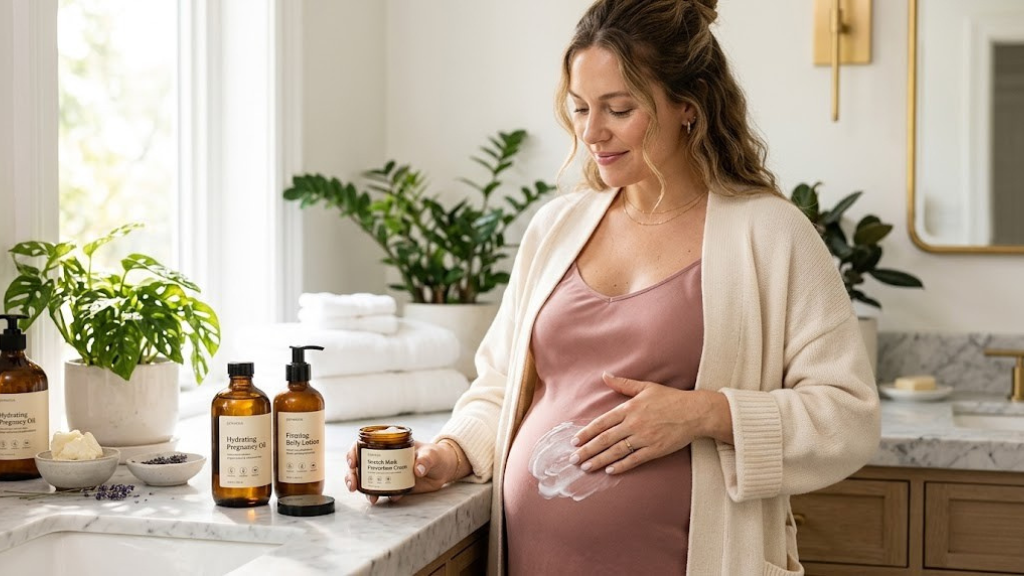
How Do Celebrities Avoid Stretch Marks During Pregnancy? The Real Routines, Products & Secrets Revealed
From Hailey Bieber’s body oil rituals to Kylie Jenner’s dermatologist-guided skincare — here’s what actually works, and what’s just expensive mythology.
Every few months, a celebrity emerges from pregnancy looking impossibly flawless — smooth skin, no visible marks, a body that barely seems to have carried a human being for nine months. Social media lights up. The comments fill with “she must have had surgery” and “what’s her secret?” And then the interviews come — carefully worded answers about “staying hydrated” and “using a good oil.”
The truth is somewhere between the cynicism and the mythology. Some celebrities genuinely do prevent stretch marks through disciplined routines, professional guidance, and genetics that would make any dermatologist quietly jealous. Others have stretch marks they simply don’t show publicly, or invest in professional treatments postpartum that reduce their appearance dramatically before the first magazine cover shoot. Many do both.
This guide pulls apart the reality from the marketing. We’ll cover every tool celebrities actually use — from the £10 oils you can buy today to the in-clinic treatments most of us will never have access to — and give you an honest, science-backed framework for the best stretch mark prevention routine you can build at any budget.
The Real Truth About Celebrity “Flawless” Pregnancy Skin
Let’s start with the uncomfortable but important foundation: the celebrity pregnancy body we see on Instagram, on red carpets, and in the carefully curated “three weeks postpartum” magazine spreads is not a complete picture of reality. It is — at minimum — a heavily curated version of it, and often a significantly altered one.
What We’re Actually Seeing
When a celebrity steps out at an event during pregnancy looking radiant and mark-free, consider what we’re not seeing: the full coverage body makeup applied by a professional MUA before every appearance, the strategic wardrobe choices that keep certain areas out of frame, the expert lighting in every professional photograph, and the digital retouching that has become standard practice in editorial photography regardless of whatever the caption says about “unfiltered” content.
This isn’t cynicism — it’s media literacy. When Hailey Bieber (whose recent pregnancy journey was widely followed) posted about skincare during pregnancy, she was transparent about her routine products. But those posts were also promotional partnerships. When Kylie Jenner was photographed postpartum, there was a meaningful gap between delivery and the first public appearance — enough time for professional treatments to begin working.
The Celebrities Who’ve Been Honest About It
Some celebrities deserve enormous credit for being genuinely transparent. Ashley Graham has posted unfiltered images showing her stretch marks proudly. Chrissy Teigen documented her stretch marks throughout her pregnancies and normalised conversations about them publicly. Khloé Kardashian has spoken candidly about the treatments she uses rather than pretending they don’t exist.
This transparency is valuable because it sets a realistic baseline: even genetically gifted women with access to the world’s best skincare advice, daily professional massage, premium products, and in-clinic treatments still get stretch marks. The goal isn’t perfection — it’s reduction and management.
Genetics: The Factor No Oil Can Override
Stretch marks (striae gravidarum in the medical literature) form when the skin is forced to expand faster than its collagen and elastin fibres can accommodate. The dermis — the middle layer of skin — tears at a microscopic level, creating the characteristic streaks that initially appear red, purple, or pink, then fade to silver or white over time.
What Your Genetics Actually Control
Your genetic inheritance determines the baseline elasticity of your dermis — specifically, how much collagen and elastin your skin naturally produces and maintains, and how your fibroblasts (collagen-producing cells) respond to the mechanical stress of rapid stretching. If your mother and maternal grandmother developed significant stretch marks during pregnancy, your likelihood of doing the same is substantially elevated regardless of prevention measures.
This explains why some celebrities with apparently minimal routines emerge from pregnancy with no visible marks, while others with rigorous and expensive preventive protocols still develop them. Genetics isn’t a certainty either way — it’s a probability distribution that all the interventions described in this guide shift in your favour.
Other Risk Factors
- Rate of weight gain: Rapid weight gain — regardless of total amount — creates more mechanical stress on the dermis than gradual, controlled gain. The speed of stretching matters as much as the extent.
- Age at first pregnancy: Younger skin has higher baseline elastin content and generally responds better to rapid stretching. Skin elasticity naturally declines through the twenties and thirties.
- Starting skin hydration: Chronically dehydrated skin has lower elasticity and tears more readily under mechanical stress. Skin that enters pregnancy well-hydrated and maintained has a functional advantage.
- Multiple pregnancies: Skin that has already been stretched in a previous pregnancy has altered collagen architecture, making subsequent stretching more likely to produce new marks.
- Baby size and position: Larger babies, twins, and certain foetal positions create different distribution of abdominal stretching.
What Celebrity Pregnancy Skin Routines Actually Look Like
Across interviews, product partnerships, and the rare moments of genuine transparency, a fairly consistent picture emerges of what high-end celebrity pregnancy skin routines involve. Here are some of the most documented and discussed examples.
The common threads across documented celebrity routines: starting early (first trimester, not third), applying products twice daily without exception, focusing on areas beyond just the belly (hips, thighs, breasts, lower back), maintaining excellent overall hydration, and having professional guidance on what products are pregnancy-safe.
Celebrity lifestyle and skin health are obviously interconnected in other ways too — their skin doesn’t just benefit from pregnancy routines but from years of professional-grade maintenance beforehand. Just as celebrities like Bella Hadid have spoken about evolving beauty routines and glow aesthetics, pregnancy skin care for most A-listers is built on a pre-existing foundation of excellent skin maintenance that most of us simply don’t have going in.

Bio-Oil Skincare Oil — The Most Clinically Studied Stretch Mark Preventive
The gold-standard celebrity favourite for pregnancy stretch mark prevention. PurCellin Oil base with vitamins A, E, and botanical extracts. Apply twice daily from first trimester for best results.
🛒 Check Price on AmazonThe Oils and Creams Celebrities Actually Use
The body oil and belly butter market has expanded enormously on the back of celebrity endorsements — but not everything that gets a celebrity name attached to it is actually what they use. Here’s a breakdown of the most genuine, repeatedly cited products along with the science behind why they work.
Top Celebrity-Endorsed and Dermatologist-Approved Oils
- Rosehip Seed Oil
Rich in trans-retinoic acid (a natural form of vitamin A), linoleic acid, and vitamin C precursors. Penetrates deeply to support collagen synthesis and skin cell regeneration. A favourite of multiple dermatologists for pregnancy skincare because it’s effective and safe. Often used by celebrities as a base layer before heavier creams.
- Sweet Almond Oil
Rich in vitamin E, oleic acid, and linoleic acid. Exceptional emollient — softens the skin and reduces transepidermal water loss, keeping the dermis pliable under stretching forces. Lightweight enough for layered application and widely considered one of the safest pregnancy-appropriate oils.
- Coconut Oil (Fractionated)
High in lauric acid and medium-chain fatty acids that penetrate the skin barrier effectively. Good standalone option but works best as a base layer under a vitamin E-rich product. Most celebrities use refined coconut oil rather than raw, as the refined version has a lighter texture for body application.
- Argan Oil
High in tocopherols (vitamin E), squalene, and oleic acid. Improves skin elasticity and reduces oxidative damage to skin cells. Dermatologically studied for both stretch mark prevention and improvement. Premium price point, but a little goes a long way when used consistently.
- Marula Oil
One of the richest natural sources of oleic acid (over 70%). Excellent skin penetration and intensely moisturising without greasiness. Increasingly popular in celebrity body care routines for its luxurious texture and strong hydrating properties. Works particularly well for the breast and hip areas where skin is thinner.
Key Ingredients to Look for in Belly Butters and Creams
What Celebrities Avoid During Pregnancy
Equally important is what gets removed from the routine. Retinoids (retinol, tretinoin) — highly effective for skin regeneration in non-pregnant life — are contraindicated during pregnancy due to potential developmental effects. Salicylic acid in high concentrations is also avoided. Most celebrities work with dermatologists who review and adjust their full routine at the start of pregnancy, replacing these actives with pregnancy-safe alternatives like vitamin C, hyaluronic acid, and niacinamide.
The Celebrity Pregnancy Diet for Stretch-Mark Resistant Skin
Celebrity skin maintenance during pregnancy isn’t just topical — what goes into the body shapes skin elasticity from the inside out. The celebrities with the best pregnancy skin outcomes almost universally have access to professional nutritional guidance, and the dietary patterns they follow are genuinely science-backed.
Collagen-Supporting Nutrients
Collagen is the primary structural protein of the dermis — the layer of skin that tears when stretch marks form. Supporting collagen synthesis through diet is one of the most direct nutritional interventions for stretch mark prevention.
| Nutrient | Role in Skin Elasticity | Best Food Sources | Daily Target |
|---|---|---|---|
| Vitamin C | Essential cofactor for collagen synthesis; antioxidant protection | Bell peppers, citrus, strawberries, kiwi | 85mg+ (pregnancy RDA) |
| Zinc | Supports fibroblast activity and skin repair | Pumpkin seeds, beef, lentils, cashews | 11mg (pregnancy RDA) |
| Protein | Amino acids (glycine, proline) are collagen building blocks | Eggs, fish, chicken, legumes, dairy | 70–100g/day |
| Vitamin E | Protects skin cell membranes from oxidative damage | Almonds, sunflower seeds, avocado, spinach | 15mg (pregnancy RDA) |
| Omega-3 Fatty Acids | Support cell membrane integrity and reduce inflammation | Salmon, sardines, walnuts, flaxseed, chia seeds | 200mg DHA/day (pregnancy) |
| Biotin | Supports keratin structure and skin barrier function | Eggs, sweet potatoes, almonds, sunflower seeds | 30–35mcg/day |
| Silica | Supports collagen cross-linking and skin firmness | Oats, barley, bananas, green beans | Found in whole grains |
Weight Gain Management
Controlled, steady weight gain — rather than rapid fluctuations — is one of the most practical and effective stretch mark prevention strategies available to everyone, not just celebrities. Medical guidelines recommend:
- Normal pre-pregnancy BMI: 25–35 lbs total gain, spread evenly across trimesters
- Overweight pre-pregnancy: 15–25 lbs total gain
- Underweight pre-pregnancy: 28–40 lbs total gain
Celebrities with professional nutrition teams are monitored closely to ensure weight gain is gradual rather than occurring in sudden spurts, which is when the most mechanically damaging rapid stretching happens. This is genuinely one of the most impactful controllable factors for stretch mark prevention — and accessible to everyone, not just those with celebrity budgets.
Beyond the purely physical, celebrity culture has increasingly embraced the concept of holistic wellness routines. Just as Margot Robbie’s dietary approach to skin health includes milk thistle and specific nutritional choices, the most skin-conscious celebrities treat their diet as part of their skincare routine — not a separate consideration.

Mama Mio Tummy Rub Butter — Celebrity Favourite Belly Butter
The pregnancy belly butter with an enormous celebrity following. Omega-rich oils, vitamin E, and a luxurious texture that absorbs beautifully. Pregnancy and breastfeeding safe, with a signature scent that makes the twice-daily ritual genuinely enjoyable.
🛒 Check Price on AmazonHydration: The Most Underrated Celebrity Secret
If there’s one thing that unites every credible celebrity pregnancy skincare routine, it’s an almost obsessive focus on hydration — and specifically, the distinction between external hydration (what you apply to skin) and internal hydration (what you drink). Both matter, and both are required for genuinely elastic, stretch-resistant skin.
Internal Hydration
Water is the single most important component of skin elasticity at the cellular level. The dermis’s collagen fibres require adequate hydration to maintain their three-dimensional structure and flexibility. Dehydrated collagen is stiffer, more brittle, and tears more readily under mechanical stress — exactly the opposite of what you want during rapid expansion.
During pregnancy, water requirements increase significantly — blood volume expands by 30–50%, amniotic fluid must be maintained, and the kidneys work harder to filter waste products. The standard recommendation is 8–10 glasses of water daily during pregnancy, increasing to 10–12 in warm weather or with physical activity. Celebrities with personal nutritionists and wellness teams are typically monitored for hydration markers as part of their ongoing health programme.
Hyaluronic Acid: The Bridge Between Internal and External
Hyaluronic acid (HA) is a naturally occurring molecule in the dermis that holds up to 1,000 times its weight in water. It’s the primary mechanism by which skin remains plump, supple, and elastic. As skin stretches during pregnancy, HA concentration in the dermis becomes more critical — and it can be supported both topically and through diet.
Topical hyaluronic acid serums and creams are pregnancy-safe and highly effective when applied to slightly damp skin (they draw moisture from the environment into the skin). Dietary precursors to HA synthesis include vitamin C, zinc, and magnesium — further reinforcing the connection between nutrition and skin elasticity.
External Hydration Layering (The Celebrity Method)
The most effective external hydration strategy used by celebrity-adjacent dermatologists involves layering:
- Layer 1 — Hydrating serum: Applied to damp skin post-shower. Hyaluronic acid serum or a water-based aloe vera gel to draw moisture into the skin barrier.
- Layer 2 — Oil: Applied over the still-slightly-damp serum to seal moisture in. Rosehip, sweet almond, or marula oil applied with light massage strokes.
- Layer 3 — Rich cream or butter: Applied over the oil to lock everything in with an occlusive barrier. Shea butter-based belly butters or a rich body cream finish the routine.
Prenatal Fitness and Its Role in Skin Elasticity
Celebrity pregnancies are often accompanied by highly publicised workout routines — and while there’s a legitimate discussion to be had about fitness culture during pregnancy, the connection between exercise and skin health is real and worth understanding.
How Fitness Supports Stretch Mark Prevention
Regular, moderate-intensity exercise during pregnancy supports stretch mark prevention through several mechanisms:
- Circulation improvement: Better circulation delivers more nutrients (including collagen-supporting vitamins and minerals) to the dermis and supports skin cell regeneration.
- Controlled weight gain: Exercise helps manage the rate of weight gain, supporting the gradual-gain-over-rapid-gain principle that reduces mechanical stress on the dermis.
- Lymphatic drainage: Movement — particularly yoga, swimming, and walking — supports the lymphatic system, which reduces fluid retention and skin swelling that increases stretching pressure.
- Stress reduction: Chronic stress elevates cortisol, which degrades collagen. Exercise-induced stress reduction supports skin integrity in a less obvious but meaningful way.
Celebrity-Documented Prenatal Routines
Many celebrity pregnancies have been accompanied by well-documented fitness approaches. Zendaya’s fitness approach — while not pregnancy-specific — illustrates how consistently active celebrities maintain the kind of circulation and body composition that supports skin health. The most commonly cited celebrity prenatal fitness activities include prenatal yoga (for lymphatic drainage and flexibility), swimming (zero-impact aerobic exercise), walking (accessible and consistent), and light resistance training (maintains muscle tone without excessive strain).
The Dermatologist Advantage: Professional Access and Treatments
Here’s the honestly uncomfortable part of the celebrity stretch mark conversation: a significant portion of what makes celebrity skin outcomes exceptional is simply access to professional medical guidance and in-clinic treatments that most people cannot afford or access. This doesn’t make the accessible elements of their routines less valuable — but it does need to be acknowledged.
What Celebrity Dermatologists Actually Do During Pregnancy
- Full skincare audit at first trimester: Every product in the routine is reviewed for pregnancy safety and effectiveness. Retinoids are removed, safe actives are added, and a comprehensive preventive protocol is established.
- Prescription topicals: Prescription-strength vitamin C serums, hyaluronic acid formulations, and centella asiatica compounds not available over the counter can be prescribed for pregnancy skin care in appropriate cases.
- Regular skin condition monitoring: Monthly check-ins track skin elasticity, hydration levels, and early stretch mark formation so the protocol can be adjusted before significant progression occurs.
- Lymphatic massage referrals: Referral to specialist pre- and postnatal massage therapists for professional lymphatic drainage massage, which supports fluid management and skin health in ways that self-massage cannot replicate.
- Nutritional collaboration: Many celebrity dermatologists work alongside nutritionists to align dietary and topical approaches for optimal skin outcomes.
In-Clinic Treatments (Post-Delivery Only)
The majority of aggressive in-clinic treatments for stretch marks are deferred until after delivery — and, if breastfeeding, until after breastfeeding concludes. The reason is safety: most laser and chemical treatments carry unknown risks during pregnancy and are contraindicated as a precaution.
| Treatment | Timing | Effectiveness | Cost Range | Access |
|---|---|---|---|---|
| Fractional Laser (Fraxel) | 3–6 months postpartum | High — 50–75% improvement | £800–£2,500/session | Celebrity/Private |
| Morpheus8 (RF Microneedling) | 3–6 months postpartum | High — collagen remodelling | £700–£1,800/session | Celebrity/Private |
| PRP (Platelet-Rich Plasma) | 3+ months postpartum | Moderate — natural regeneration | £500–£1,200/session | Private clinics |
| Tretinoin (Rx Retinol) | Post-breastfeeding | High — dermis remodelling | £30–£80/month | Dermatologist Rx |
| Professional Microneedling | 3–4 months postpartum | Moderate-High | £200–£600/session | Private clinics |
| Topical Centella Asiatica | During & after pregnancy | Moderate — preventive | £20–£80/product | Widely available |
The reality for most people is that the treatments at the top of this table — the ones that produce the most dramatic results in celebrity postpartum skin — are simply not financially accessible. This makes the topical prevention routine all the more important: for most people, it’s the primary tool available, which is precisely why doing it consistently and correctly from the first trimester matters so much.

Palmer’s Cocoa Butter Massage Lotion — Best Budget Celebrity Alternative
The accessible classic with genuine efficacy. Cocoa butter, vitamin E, collagen, and elastin in a pregnancy-safe formula. Used by countless celebrities before their brands existed and by millions who want real results without the premium price tag.
🛒 Check Price on AmazonBest Stretch Mark Prevention Products: The Full Comparison
The market for pregnancy stretch mark products is enormous and confusing in equal measure. Here’s a structured breakdown of the most evidence-backed and celebrity-validated options across price tiers.
| Product | Key Ingredients | Texture | Pregnancy Safe | Clinical Evidence | Price Tier |
|---|---|---|---|---|---|
| Bio-Oil | PurCellin Oil, Vit A, Vit E, Calendula | Dry oil | Yes | Strong | £ |
| Palmer’s Cocoa Butter Massage Lotion | Cocoa butter, Vit E, Collagen, Elastin | Lotion | Yes | Strong | £ |
| Mama Mio Tummy Rub Butter | Omega oils, Shea butter, Vit E | Rich butter | Yes | Moderate | ££ |
| Burt’s Bees Mama Bee Belly Butter | Shea butter, Sweet almond oil, Vit E | Whipped butter | Yes | Moderate | £ |
| Clarins Body Partner Stretch Mark Expert | Centella asiatica, HA, Peptides | Light cream | Yes | Strong | ££ |
| Nécessaire The Body Serum | 5 types HA, Niacinamide, Ceramides | Serum | Yes | Moderate | £££ |
| Weleda Stretch Mark Massage Oil | Arnica, Sweet almond, Jojoba, Wheat germ | Oil | Yes | Moderate | ££ |
| ELEMIS Frangipani Monoi Body Oil | Frangipani extract, Monoi, Sea buckthorn | Luxe dry oil | Check with Dr | Moderate | £££ |
- Vitamin E as a primary antioxidant and emollient
- At least one carrier oil (sweet almond, jojoba, or argan)
- No essential oils known to be contraindicated in pregnancy
- Fragrance-light or fragrance-free formulation
- Centella asiatica, collagen peptides, or hyaluronic acid
- Proven safe for first-trimester use
- Essential oils: clary sage, rosemary, juniper berry
- High-concentration salicylic acid
- Retinol or retinoid compounds
- Synthetic fragrances that may irritate pregnancy-sensitive skin
- Mineral oil as the primary ingredient (occlusive but not nourishing)
- No evidence of clinical testing or safety validation
Post-Delivery: What Celebrities Do After Birth to Treat Stretch Marks
The postpartum period is when the most significant interventions become available, and this is where the gap between celebrity and everyday skin outcomes widens most dramatically. Understanding what’s available — even if not immediately accessible — is useful for planning.
The Postpartum Treatment Timeline
- Weeks 1–6: Gentle Topicals Only
The body is recovering from delivery and (often) breastfeeding. Continue the pregnancy oil and cream routine. Add vitamin C serum if not breastfeeding. No aggressive treatments recommended yet.
- Months 2–3: Introduce Stronger Topicals
If not breastfeeding: introduce tretinoin (prescription) or retinol at low concentration under dermatologist guidance. Tretinoin is the most evidence-backed topical treatment for established stretch marks. Glycolic acid body treatments can also begin at this stage.
- Months 3–6: In-Clinic Assessment
First dermatologist consultation for in-clinic treatment options. Microneedling and PRP are often the first-line recommendations for active (still pink/red) stretch marks, as they respond better to treatment than mature white/silver marks.
- Months 6–12: Laser and Advanced Treatments
Fractional laser (Fraxel, CO2) and radiofrequency microneedling (Morpheus8) become appropriate. Multiple sessions typically required for significant improvement. This is the primary tool celebrities with “post-baby body” press tour timing are using.
Accessible Post-Delivery Options
For those without access to in-clinic treatments, the evidence-based accessible options are:
- Tretinoin (prescription retinol): Available via dermatologist or increasingly via telehealth platforms. Clinically proven to improve stretch mark appearance with consistent nightly use over 3–6 months.
- Glycolic acid body lotion: Available OTC. Exfoliates the skin surface, stimulates collagen production, and improves texture. Use 3–4 times weekly on stretch mark areas.
- Vitamin C serum on stretch marks: Supports new collagen synthesis in the dermis. Use daily under SPF (stretch mark areas on the abdomen are often exposed to sun at beaches and pools — UV exposure worsens the appearance).
- Professional massage: Stimulates circulation and lymphatic drainage. More accessible than laser treatments and genuinely effective for improving skin texture and reducing the visibility of stretch marks over time.
Your Complete Celebrity-Inspired Stretch Mark Prevention Routine
Here’s a complete, practical, celebrity-inspired routine that incorporates all the evidence-backed elements discussed in this guide — at a realistic budget, using accessible products, and structured for maximum effectiveness.
Morning Routine
- Lukewarm shower (not hot)
Hot water strips the skin’s natural oil barrier. Keep showers warm, not hot, and limit to 10 minutes. Pat skin dry rather than rubbing aggressively.
- Apply hyaluronic acid serum to damp skin
While skin is still slightly damp from the shower, apply a hyaluronic acid serum to the belly, hips, breasts, and thighs. The moisture from the shower helps the HA draw hydration into the skin.
- Layer sweet almond or rosehip oil
Apply 5–8 drops of sweet almond or rosehip oil over the serum with gentle circular massage strokes. Spend 3–5 minutes massaging each area — this isn’t just about product absorption but circulation stimulation.
- Apply belly butter or rich cream as the final layer
Lock everything in with a generous application of belly butter or rich body cream. Focus on areas under most tension — lower belly, hips, outer thighs, and under the breasts.
Evening Routine
Repeat the oil and cream application in the evening, ideally after a gentle self-massage in the shower. The evening application is arguably more important than the morning one because skin regeneration is most active during sleep — products applied at night have the longest uninterrupted contact time with the skin.
Weekly Additions
- Twice weekly: Gentle dry body brushing before the shower on non-irritated skin. Stimulates circulation and lymphatic drainage. Use soft natural bristle brush with light pressure, working toward the heart.
- Once weekly: A nourishing overnight body mask — apply a thick layer of pure shea butter or a body oil mixed with honey to the stretch mark-prone areas, leave overnight under a loose cotton layer.
Consistency beats perfection. A modest routine done every day produces better results than an elaborate routine done three times a week. Set a reminder on your phone. Keep products in the bathroom where you’ll see them. Make the routine something you enjoy rather than something you endure — that’s what makes celebrity routines actually stick.
The celebrities with the best pregnancy skin outcomes aren’t necessarily using the most expensive products. They’re using consistently good products, consistently, every day, from early in the first trimester. That’s the actual secret, and it’s accessible to everyone.
Many celebrities have also spoken about the role of a holistic wellness approach — just as Ana de Armas’s three-step skincare routine demonstrates, the celebrities with the best skin outcomes tend to treat skincare as a system rather than individual products. Apply that same systems thinking to pregnancy prevention, and the results will follow.

Nécessaire The Body Serum — Premium Hyaluronic Acid Body Treatment
Celebrity-loved body serum with five weights of hyaluronic acid, niacinamide, and ceramides. Applies as the first hydration layer in the pregnancy prevention routine — pregnancy-safe and genuinely transformative for skin texture and elasticity.
🛒 Check Price on AmazonStretch Mark Myths Debunked — What Celebrities (and Brands) Get Wrong
The pregnancy skincare market is full of overpromising, and celebrity endorsements amplify both the genuine insights and the mythology. Here’s a straight-talking myth-bust on the most common stretch mark misinformation.
Myth 1: “Coconut Oil Prevents All Stretch Marks”
Coconut oil is a good emollient and occlusive. It keeps skin soft and reduces transepidermal water loss. But it is not uniquely effective compared to other oils, and it has no special stretch mark-preventing properties that sweet almond oil, argan oil, or a quality body butter don’t also have. The obsession with coconut oil in this context is largely a marketing phenomenon, not a scientific one.
Myth 2: “Cocoa Butter Is Clinically Proven to Prevent Stretch Marks”
This is one of the most persistent myths in pregnancy skincare. Multiple randomised controlled trials have found no statistically significant difference between cocoa butter and placebo for stretch mark prevention. Cocoa butter is a fine emollient, but the clinical evidence for it as a specific stretch mark preventive is weak. Products containing cocoa butter alongside other evidence-backed ingredients (vitamin E, centella asiatica, hyaluronic acid) are more effective than cocoa butter alone.
Myth 3: “Celebrity Skin is Naturally Perfect”
As covered in Section 1 — it categorically is not. Every celebrity photograph involves professional lighting, expert makeup application, and in most cases, post-production editing. The “unfiltered” celebrity pregnancy images that go viral are almost always still professionally lit, styled, and shot in the most flattering conditions available.
Myth 4: “Expensive Products Work Better”
Price is not a reliable indicator of efficacy for stretch mark prevention products. The evidence-backed ingredients (hyaluronic acid, vitamin E, centella asiatica, sweet almond oil) are available in affordable products. The most expensive products often justify their price with texture, fragrance, brand positioning, and packaging — not meaningfully superior active ingredient concentrations. Palmer’s and Bio-Oil consistently outperform products costing five times as much in consumer and clinical comparisons.
Myth 5: “Starting in the Third Trimester Is Good Enough”
This is probably the most harmful myth, because it’s so easy to act on. By the third trimester, the most rapid and dramatic skin stretching is already underway or completed. The most effective window for preventive topical application is the first and second trimester — before significant visible growth — when the dermis can be primed and supported ahead of the most intense mechanical stress.
Frequently Asked Questions
Some celebrities genuinely have very few or no visible stretch marks due to genetic predisposition that makes them less susceptible. Others develop stretch marks and choose not to show them publicly, or invest in professional postpartum treatments that significantly reduce their appearance before press appearances and photoshoots. Many celebrities have been admirably honest about having stretch marks — Ashley Graham, Chrissy Teigen, and Khloé Kardashian among them. The “flawless” pregnancies we see in media are a combination of genetics, rigorous preventive routines, professional styling, and in many cases, significant digital retouching.
The most commonly cited celebrity choices are: Bio-Oil (the most widely endorsed and clinically studied option), rosehip seed oil, pure vitamin E oil, sweet almond oil, argan oil, and marula oil. Many celebrities layer multiple oils rather than using a single product — starting with a lighter oil like rosehip or jojoba, then applying a richer one like sweet almond or argan on top, followed by a belly butter as the final occlusive layer. Consistency twice daily from the first trimester is universally cited as more important than the specific product used.
No topical treatment can guarantee complete stretch mark prevention for everyone — genetics is the primary determining factor and no product can override a strong genetic predisposition. However, consistent skin hydration, controlled weight gain, excellent nutrition, and regular twice-daily application of evidence-backed oils and creams starting in the first trimester significantly reduces both the quantity and severity of stretch marks in most people. For those with lower genetic risk, a rigorous preventive routine may result in no visible stretch marks at all. The honest message is: prevention routines make a meaningful difference for almost everyone, even if not to the point of complete prevention for those with higher genetic risk.
Dermatologists consistently recommend: (1) Daily application of products containing hyaluronic acid, centella asiatica, vitamin C, and vitamin E starting from the first trimester. (2) Maintaining excellent internal hydration — 8–10 glasses of water daily. (3) Controlled, gradual weight gain rather than rapid weight fluctuations. (4) A collagen-supporting diet rich in vitamin C, zinc, protein, and omega-3 fatty acids. (5) Avoiding hot showers that strip natural skin oils. (6) Gentle daily massage during product application to stimulate circulation. Retinoids are contraindicated during pregnancy; hyaluronic acid, vitamin C, and centella asiatica are the safe, effective alternatives.
Ideally, begin a stretch mark prevention routine from weeks 8–12 of the first trimester — before significant visible growth begins. The internal structure of the dermis begins changing from early pregnancy, and priming the skin’s hydration and elasticity ahead of the most rapid growth phase produces significantly better outcomes than starting in the third trimester. Focus preventive application on all high-risk areas from the start: belly, lower back, hips, outer thighs, and breasts.
Yes — internal hydration is fundamental to maintaining skin elasticity. Well-hydrated skin is more supple and has greater capacity to stretch without tearing the dermis. Dehydrated collagen is stiffer and more brittle under mechanical stress. During pregnancy, aim for at least 8–10 glasses of water daily, more in warm weather or with physical activity. Water-rich foods (cucumber, watermelon, citrus fruits, berries) contribute to hydration and also provide vitamin C for collagen synthesis. Think of water as the foundation that makes everything you apply topically more effective.
Post-delivery (and post-breastfeeding), celebrities have access to professional treatments including: fractional laser resurfacing (Fraxel), which produces 50–75% improvement in stretch mark appearance; Morpheus8 radiofrequency microneedling, which stimulates deep collagen remodelling; PRP (platelet-rich plasma) therapy using the patient’s own growth factors; and prescription tretinoin for ongoing collagen stimulation. These treatments require multiple sessions and months to show full results. The timing of celebrity “post-baby body” appearances in media is typically timed to coincide with significant treatment progress — usually 6–12 months postpartum.
Bio-Oil is one of the most clinically studied stretch mark products available, and the evidence supports its use as a preventive measure. Its PurCellin Oil base (which improves product penetration), combined with vitamin A, vitamin E, calendula, lavender, and rosemary extracts, creates a formulation that improves skin elasticity and moisture retention. Multiple clinical studies show statistically significant improvement in stretch mark appearance with consistent twice-daily use. It works significantly better as a preventive measure (starting in the first trimester) than as a treatment for already-established stretch marks. For its price point, it consistently outperforms more expensive alternatives in consumer and clinical comparisons.
A collagen-supporting diet is the most effective nutritional approach for stretch mark prevention. Key elements: vitamin C (citrus, bell peppers, strawberries) for collagen synthesis; zinc (pumpkin seeds, meat, legumes) for fibroblast activity and skin repair; adequate protein (70–100g/day) providing glycine and proline — the primary amino acids in collagen; vitamin E (almonds, avocado, sunflower seeds) for antioxidant skin protection; omega-3 fatty acids (salmon, walnuts, flaxseed) for cell membrane integrity; and consistent hydration with water and water-rich foods. Avoiding nutrient deficiencies in these areas is as important as supplementing above baseline.
During pregnancy itself, most aggressive in-clinic treatments are deferred due to safety considerations. What celebrities have during pregnancy that most people don’t is regular dermatologist consultations, full skincare routine audits at the start of pregnancy, access to prescription-grade topicals not available OTC, professional lymphatic massage from specialist therapists, and comprehensive nutritional guidance. These don’t involve aggressive treatments — they involve expert guidance applied consistently, which compounds into significantly better outcomes over nine months. After delivery, the gap widens when in-clinic treatments become available. The pregnancy period advantage is primarily about professional guidance, premium preventive products, and disciplined consistency.
The Honest Conclusion: What You Can Actually Achieve
The celebrity pregnancy skin ideal — perfectly smooth, mark-free, glowing — is a combination of genetics, professional support, disciplined prevention, careful media curation, and in many cases, significant postpartum treatments that most of us will never access. The gap between what celebrities genuinely achieve and what we’re led to believe they achieve is real, and it matters that we understand it.
But here’s what’s also real: the evidence-backed elements of what celebrities do are genuinely accessible, genuinely effective, and genuinely worth doing. Starting a consistent hydration and oil routine in the first trimester, supporting collagen synthesis through diet, managing weight gain carefully, staying well hydrated, and committing to twice-daily application of evidence-backed products — all of this measurably reduces stretch mark severity for the vast majority of people.
You don’t need a £2,500 laser treatment or a private dermatologist to have meaningfully better pregnancy skin outcomes. You need consistency, the right products applied the right way, excellent internal hydration, and realistic expectations about what prevention can and cannot achieve given your genetic starting point.
What celebrities have that’s genuinely non-negotiable is early starts and unwavering consistency. That part — the showing up every single day from week 8 onwards — costs nothing, and it’s the most impactful thing you can do.
For more on celebrity beauty approaches and the real science behind them, explore how Hailey Bieber approached her pregnancy reveal and wellness journey — and how the most talked-about celebrity pregnancies of recent years have shaped conversations around body image and realistic beauty standards.
Want More Celebrity Beauty & Lifestyle Secrets?
From real celebrity skincare routines to the wellness habits behind their most iconic looks — AllCelebsHub covers it all with honesty, depth, and zero fluff.
✦ Explore AllCelebsHub →