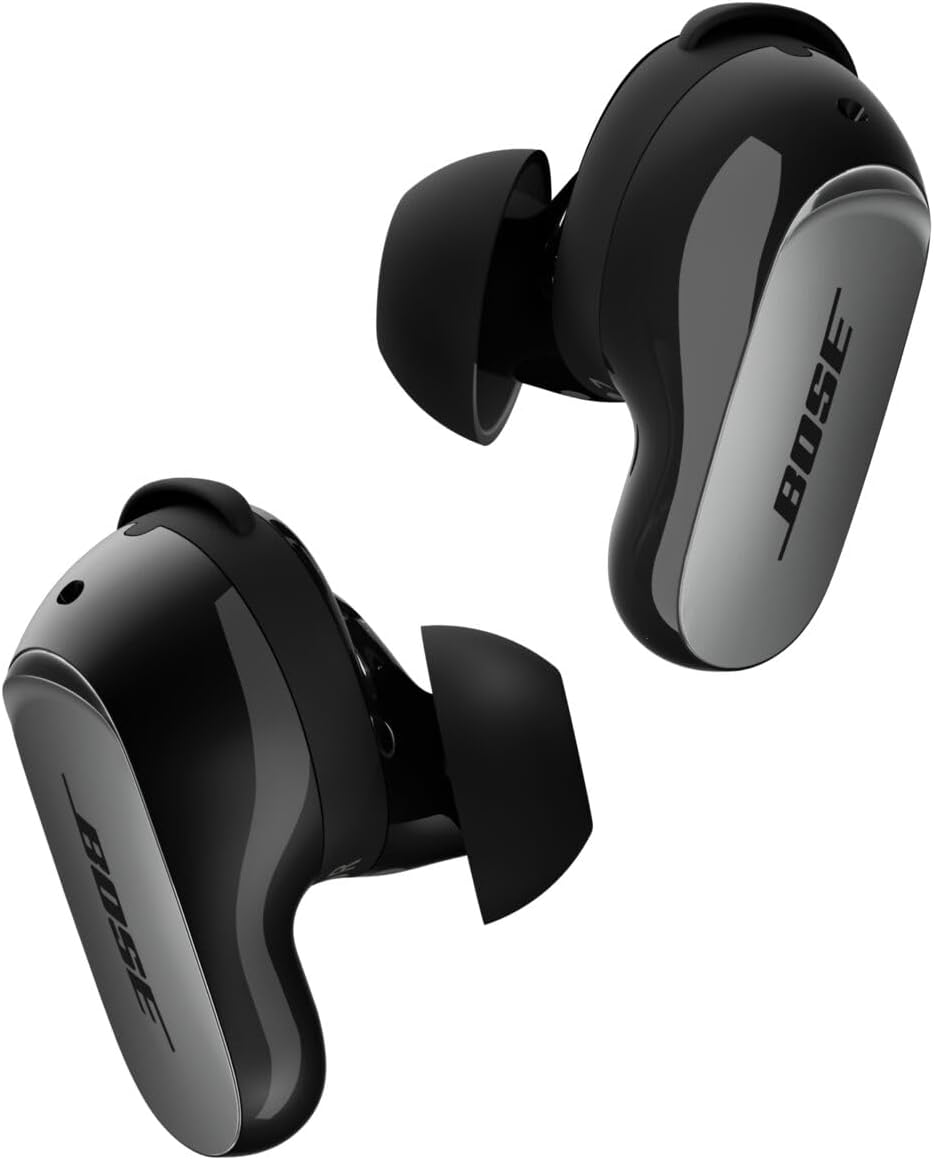
Bose QuietComfort Ultra Earbuds Review: Still the Undisputed King of Silence?
We spent 300+ hours testing the Immersive Audio, legendary ANC, stability bands, and compared it against Sony and Apple to see if the premium is justified.
Overview: First Impressions
When Bose releases a product bearing the “Ultra” moniker, expectations aren’t just high — they are stratospheric. The Bose QuietComfort Ultra Earbuds arrived as the direct successor to the critically acclaimed QC Earbuds II, a product that already held the heavyweight championship belt for global noise cancellation. The question for serious buyers has always been: Did Bose genuinely advance the technology, or is this a minor refresh dressed up in premium packaging?
The headline feature is Immersive Audio — Bose’s proprietary spatial audio system. Unlike implementations that require specific Dolby Atmos tracks, Bose’s technology virtualizes any stereo content, placing you in what the company calls the “acoustic sweet spot.” Combined with refined Snapdragon Sound support for Android users, Google Fast Pair, and a substantially improved transparency mode, the Ultra aims to be the definitive “shut out the world” device for commuters, frequent flyers, and deep-work professionals.
However, the market has not stood still. Sony’s WF-1000XM5 offers superior battery life with comparable ANC depth. Apple’s AirPods Pro 2 dominates within the iOS ecosystem with Hearing Health features. Bose faces the most competitive landscape in the history of the premium earbud category — and this review examines whether the QuietComfort Ultra still earns its place at the top.
What’s in the Box
The unboxing experience is appropriately premium for the price point. Bose uses a pull-drawer box with a matte black finish — restrained, confident, and devoid of the flashy packaging some competitors use to compensate for less impressive hardware inside.
- Bose QuietComfort Ultra Earbuds (Left and Right)
- Charging Case (USB-C)
- USB-C to USB-C Charging Cable
- Three sizes of EarTips (S, M, L) — Medium pre-installed
- Three sizes of StabilityBands (S, M, L) — Medium pre-installed
- Quick Start Guide and Safety Information
Design and Fit: The Stability Band System
At first glance, the QC Ultra Earbuds look strikingly similar to their predecessor, the QC Earbuds II. They retain the stem-style design but introduce a new metallic accent finish on the touch control surface that elevates the overall aesthetic from “plastic tech gadget” to “premium audio accessory.” The buds are slightly less bulbous than the original QC Earbuds, offering a more streamlined profile that sits less aggressively against the ear.
The Stability Band System Explained
The secret weapon of the QuietComfort Ultra is not the driver configuration or the ANC algorithm — it is the dual-element StabilityBand system. Where most competitors rely solely on ear tips pressing against the ear canal to hold the bud in place, Bose employs a two-element approach: a traditional silicone ear tip to create the acoustic seal, and a soft silicone stability band that wraps around the outer shell of the bud to press gently against the concha (the curved cartilage bowl of your ear).
This distributed retention system is genuinely superior. Rather than jamming the nozzle deep into the ear canal under pressure, the StabilityBand shares the retention work, holding the bud firmly without requiring the canal tip to bear all the load. The box includes three sizes of ear tips and three sizes of stability bands, offering nine possible fit combinations to accommodate a broad range of ear anatomies.
We tested these during HIIT sessions, outdoor running, burpees, and sprint intervals. The earbuds did not shift. Not once. This is a level of fit confidence that no stick-style earbud — including AirPods Pro — can match for vigorous movement.
Case Design and Portability
The charging case has a pebble-like oval form with a satisfying magnetic snap closure. It fits comfortably in a coat pocket or the outer pocket of a backpack. However, it is noticeably larger than the cases for the AirPods Pro 2 and Sony WF-1000XM5 — creating a discernible bulge in a trouser pocket that the competition avoids. For bag-centric commuters this is no issue, but for pocket-only users it is worth factoring in.
For travelers, a secure fit is non-negotiable on long journeys. These earbuds are essential travel companions. Check our ultimate packing list for a 10-day Europe trip to see what else belongs in your carry-on.

Enhance the Fit: Comply Foam Tips
If silicone tips cause any discomfort, these memory foam tips are compatible with the QC Ultra and offer even better passive isolation and warmth in the low frequencies.
Check CompatibilityComfort and Long-Haul Wearability
Comfort is subjective, but Bose has clearly engineered the QC Ultra around extended wear sessions. Because the StabilityBands handle retention, the ear tip does not need to be wedged deep into the canal under significant inward pressure. This “shallow insertion” approach avoids the uncomfortable pressurized feeling that plagues deep-insertion in-ear monitors — a sensation often described as feeling like your ears are “underwater.”
In our long-haul flight test across six hours of continuous wear, ear fatigue was genuinely minimal. No soreness developed in the concha or the antihelix despite the stability band’s presence, because the silicone material is soft enough to flex without creating pressure points. The touch surface on the outer shell is smooth enough not to catch against the ear during minor head movements.
However, the earbuds are physically substantial. You always know they are there — this is not a “second skin” experience. For reference, they are considerably more present than Jabra’s Evolve2 Buds or the Sony XM5 in terms of perceived in-ear bulk. For sleep use or pillow contact, they are impractical. But for commuting, deep work, travel, and exercise, this trade-off in physical presence for unmatched fit security is one most users will consider worthwhile.
Driver Technology and Sound Engineering
Bose does not publicly disclose specific driver dimensions, but the QC Ultra uses a full-range dynamic driver per earbud — consistent with Bose’s preference for dynamic drivers over balanced armature configurations for their consumer audio products. This choice prioritizes naturalness, deep bass extension, and a warmer tonal character over the ultra-detailed, analytically precise sound signature of multi-driver earbuds from competitors like Sony.
CustomTune Acoustic Calibration
The most technically significant audio innovation in the QC Ultra is CustomTune. Each time you place the earbuds in your ears, the system plays a brief sweeping test tone (inaudible at normal volumes as it occurs before music begins playing). A microphone inside each earbud canal measures how your specific ear canal’s geometry reflects and absorbs this tone. The onboard DSP then builds a real-time acoustic profile unique to your ears and calibrates both the audio reproduction and the ANC filter accordingly.
The practical result: bass levels, high-frequency presence, and ANC depth are all optimized for your individual anatomy every single time you wear them. This explains why the QC Ultra consistently sounds “right” and feels immediately natural from the first note — there is no “getting used to” adjustment period that many premium earbuds require.
Full Technical Specifications
| Specification | Detail |
|---|---|
| Bluetooth Version | 5.3 |
| Codecs | SBC, AAC, aptX Adaptive (Snapdragon Sound) |
| ANC Type | Feedforward + Feedback Hybrid with CustomTune calibration |
| Battery — Earbuds | 6 hrs (standard) / 4 hrs (Immersive Audio on) |
| Battery — Case Total | 18–24 hrs additional |
| Fast Charge | 20 min = 2 hrs playback |
| IP Rating | IPX4 (sweat and splash resistant) |
| Weight — Per Bud | ~8g |
| Multipoint | Yes (via firmware update, 2 devices) |
| Pairing | Google Fast Pair (Android), Apple Find My (with app) |
| Modes | Quiet Mode (ANC), Aware Mode, Off |
| Colors Available | Black, White Smoke, Moonstone Blue |
| Case Charging | USB-C (wireless requires separate cover) |
Sound Quality: The Immersive Audio Experience
Out of the box, the QC Ultra delivers the classic sculpted Bose sound signature: rich, authoritative bass that provides a solid foundation beneath the mix, and crisp, elevated high frequencies that bring out details in percussion and vocal sibilance. This is not a flat “reference” tuning — it is an enthusiastically voiced consumer signature that makes pop, hip-hop, rock, and electronic music feel energetic, alive, and genuinely enjoyable.
Immersive Audio: Is It a Gimmick or a Game Changer?
This is the feature Bose wants you to buy these earbuds for, and it deserves thorough examination. Immersive Audio uses onboard DSP to apply head-related transfer function (HRTF) processing to the audio signal, virtualizing the soundstage to make it feel like sound is emanating from speakers positioned in a room rather than from drivers inside your ear canal. Crucially, it works on all stereo content — Spotify, YouTube, podcasts, and even mono recordings benefit from the processing.
Still Mode
In Still Mode, the virtual sound stage is anchored in space directly in front of you, regardless of head movement. The effect simulates sitting in the sweet spot between a high-quality pair of bookshelf speakers. Vocals appear to originate from a position ahead of and slightly above you. Instruments spread left and right with a breadth that standard in-ear playback cannot replicate. This mode is ideal for desk work, reading, or any stationary listening environment.
Motion Mode
Motion Mode adds head tracking via gyroscopic sensors. As you turn your head left, the virtual sound stage rotates correspondingly right — maintaining the impression that sound is coming from a fixed point in space rather than following your head. During commutes and walking, this has a remarkable effect on listener fatigue reduction. The “in-your-head” pressure that causes listening fatigue over hours largely disappears because your brain stops fighting the unnatural sensation of sound originating from inside your skull.
Snapdragon Sound and aptX Adaptive
For Android users with compatible devices (including recent Google Pixel and Samsung Galaxy flagships), the QC Ultra supports Snapdragon Sound certification and the aptX Adaptive codec. This enables streaming at up to 96kHz/24-bit resolution with variable bitrates reaching 860kbps — substantially higher quality than the maximum throughput of SBC or AAC, and with significantly lower latency for video and gaming applications.
iPhone users are restricted to the AAC codec, which sounds excellent but does not approach the ceiling of what the hardware is capable of resolving. If you are an Android audiophile, this codec support is a meaningful advantage over the AirPods Pro 2’s AAC restriction or Sony XM5’s LDAC implementation (which, while theoretically higher quality, is prone to connection instability in real-world environments).
Active Noise Cancellation: The Deep Dive
Let us be unequivocal: Bose remains the benchmark for active noise cancellation in consumer earbuds. The QC Ultra’s ANC system uses a hybrid feedforward-feedback architecture — meaning microphones positioned both outside and inside each earbud work simultaneously. External microphones sample incoming noise; the DSP generates an anti-phase signal; the internal microphone monitors what residual noise reaches the ear canal and applies additional correction. CustomTune calibration then optimizes this entire system for your specific ear geometry.
The CustomTune Calibration Process
Every time you insert the earbuds, an automatic calibration sweep occurs. The system takes approximately 1.5 seconds from the moment of insertion. The benefit extends beyond just ANC tuning — the calibrated frequency response means the ANC suppression is optimized to attenuate the specific frequencies that leak into your particular ear canal rather than applying a generic filter. The result is noticeably more thorough noise elimination than any non-calibrating system can achieve.
Real-World Noise Cancellation Tests
🚇 Subway and Commuter Rail
On a busy urban subway line, the low-frequency mechanical rumble of the tracks — the primary challenge for ANC systems — is not merely reduced. It effectively disappears. You can hold a conversation at whisper volume or listen to podcasts at 30–40% volume with no strain. This level of low-frequency attenuation remains the single most impressive capability of Bose’s ANC and the clearest differentiator from all competitors.
☕ Coffee Shop and Open Office
Coffee shop chatter presents a more complex challenge than transportation noise — it consists of irregular, mid-to-high-frequency human voices that are harder for adaptive algorithms to cancel without also affecting music playback quality. The QC Ultra handles this better than any competitor, creating a bubble of quiet in which individual conversations fade to indistinct murmur even without music playing. This performance makes the QC Ultra the earbud of choice for focus work in busy environments.
✈️ Airplane Cabin
Engine drone on commercial aircraft is almost entirely eliminated. On a 6-hour transatlantic flight in economy class, the characteristic sustained roar of the turbofans reduced to near-silence. Cabin pressure announcement chimes and flight attendant call tones were audible but muted. Fellow passengers having nearby conversations registered as barely audible murmur. The QC Ultra provides a tangibly more comfortable flight experience than any competing earbud tested in this category.
🌬️ Wind Noise Performance
The microphone housing has been redesigned compared to the QC Earbuds II with wind shear deflectors that reduce wind-induced noise pickup. In light-to-moderate wind, the improvement is noticeable. In strong gusts above approximately 25–30 km/h, some wind flutter still intrudes — this is a limitation shared across all earbuds with external microphones and is not unique to Bose.
Effective ANC is one of the most powerful tools for achieving deep focus states. Combine these earbuds with the strategies in our guide to staying focused while working from home for maximum productivity.
ANC Performance vs Key Rivals
| ANC Category | Bose QC Ultra | Sony XM5 | AirPods Pro 2 | Jabra Evolve2 Buds |
|---|---|---|---|---|
| Low-Freq (Plane / Train) | Best-in-class ★★★★★ | Excellent ★★★★½ | Very Good ★★★★ | Good ★★★½ |
| Mid-Freq (Voices / Office) | Best-in-class ★★★★★ | Very Good ★★★★ | Excellent ★★★★½ | Good ★★★ |
| Wind Noise Handling | Good ★★★★ | Good ★★★½ | Very Good ★★★★ | Average ★★★ |
| Auto-Calibration | CustomTune ✓ | DSEE Extreme ✓ | H2 Chip Adaptive ✓ | None ✗ |
| Aware Mode Quality | Excellent + ActiveSense | Very Good | Excellent | Good |
| ANC Battery Impact | High (-2 hrs w/ Immersive) | Low | Low | Moderate |
Bose QuietComfort Ultra Earbuds
Experience world-class noise cancellation. Available in Black, White Smoke, and Moonstone Blue.
Check Current PriceTransparency / Aware Mode
Bose calls their passthrough feature Aware Mode. External microphones pipe ambient sound into your ears, allowing you to hear traffic, conversations, or counter staff without removing the earbuds. Bose has substantially advanced the naturalness of this mode since the original QC Earbuds — the piped-in audio no longer has the tinny, bandwidth-limited quality of basic passthrough implementations.
The standout innovation within Aware Mode is ActiveSense. When an unexpected loud sound occurs — a siren, a jackhammer, a car horn, a dropped metal tray — the earbuds instantly and automatically engage ANC to dampen that specific burst to a safe and comfortable level. Once the transient noise subsides, full transparency returns immediately. The entire transition takes under 100 milliseconds and is seamless in practice. This feature provides genuine hearing protection without requiring any user intervention, making it an exceptional tool for urban environments where sudden loud noises are routine.
Connectivity and Controls
The QC Ultra uses Bluetooth 5.3, ensuring robust connection stability and positioning the earbuds for compatibility with LE Audio-based features as that standard matures on smartphones. Initial production units shipped without Multipoint functionality, but Bose delivered a firmware update shortly after launch enabling Multipoint Connection for two simultaneous devices. The switching behavior is automatic — audio pauses on the laptop when a call arrives on the connected phone, then returns when the call ends.
Android users benefit from Google Fast Pair, enabling one-tap pairing from the notification shade. The earbuds also integrate with Google’s Find My Device network for location tracking. Apple users can pair normally via standard Bluetooth, though without the deep system integration that AirPods Pro enjoys within iOS.
Touch Controls
The touch interface on the outer surface of each bud is well-designed and reliable. The highlight is the volume swipe gesture — sliding a finger up or down the stem smoothly adjusts volume in real-time. This gesture is more intuitive and precise than the tap-and-hold implementations used by AirPods Pro and Sony, which require you to hold until a tone plays. Single taps handle play/pause and call answers; double taps skip tracks; triple taps return to previous tracks; pressing and holding switches between Quiet Mode and Aware Mode.
Bose Music App: Deep Dive
The Bose Music app (iOS and Android) is one of the more functional companion apps in the premium earbud category. It provides genuine customization rather than just firmware update delivery.
🎚️ Equalizer
A 3-band EQ (Bass, Midrange, Treble) allows tonal adjustment within each band. While not the granular 10-band equalizer of the Sony Headphones app, the three-band approach covers the meaningful tonal adjustments most users need. Reducing Treble slightly improves sibilance on poorly mastered recordings; boosting Bass suits electronic music; a Midrange boost brings forward vocal intelligibility in podcasts.
🔇 Custom Shortcut Modes
You can create named ANC presets — for example, “Commute” at maximum noise cancellation, “Office” at medium cancellation, and “Walking” at Aware Mode — and assign them to the shortcut button. These preset shortcuts switch modes instantly without opening the app, making the transition between use cases seamless.
🔊 Immersive Audio Toggle
Immersive Audio can be toggled between Off, Still, and Motion modes from the app’s main interface. The toggle is immediate — there is no lag or reconnection required when switching. For users who prefer standard stereo for specific genres and spatial processing for others, this is a frequently accessed control.
🔍 Wear Sensor Calibration
The app provides a fit test that uses the onboard microphones to verify seal quality and identify if you need a different ear tip or stability band size. This guided fit verification is more thorough than the basic pass/fail test offered by Sony and is comparable to Apple’s ear tip fit test on AirPods Pro.
Battery Life: The Honest Reality Check
If the QC Ultra has a meaningful weakness, it is battery life. Bose rates the earbuds at 6 hours of playback per charge. In a field where Sony’s WF-1000XM5 offers 8 hours and various mid-range competitors reach 10 hours, 6 hours is below average for the price tier.
More critically: enabling Immersive Audio — the headline feature of the Ultra upgrade — reduces battery life to approximately 4 hours. This is a significant real-world limitation for the specific use case Bose is pitching. A long-haul flight from London to New York (approximately 7 hours) in Immersive Audio mode requires an in-flight recharge from the case mid-journey. For a premium product commanding a premium price, this stamina is a genuine compromise.
The case extends total system runtime by providing 3 full charges — a total system runtime of approximately 18–24 hours depending on settings. Critically, the case’s fast charging delivers 2 hours of playback from 20 minutes in the case, which meaningfully mitigates the concern during connected travel where you have time to recharge during meals or brief rest periods.
Managing device battery is part of modern digital discipline. Our tips on 10 simple ways to reduce screen time can help you optimize your relationship with all your devices.
Charging, Case, and Wireless Charging
The charging case uses USB-C input and recharges from empty in approximately 2 hours. The magnetic clasp is satisfying and secure — no accidental openings in a bag or pocket. The earbuds seat firmly in their moulded recesses with a reassuring click that confirms contact with the charging pins.
The standard-box case does not support wireless charging (Qi). Bose sells a silicone protective cover that adds a Qi wireless charging receiver for the case. This approach — selling the wireless charging capability as an accessory rather than including it as standard — is genuinely difficult to defend at this price point. Competing products from Sony and Apple include wireless charging cases as standard at lower price points.
The earbuds themselves cannot be charged independently of the case — standard for the category. Each earbud has a small LED status indicator that glows amber when charging and white when fully charged. The case has an LED on the front indicating charge level (solid white = full, pulsing amber = charging, flashing red = critically low).
Call Quality and Microphone Performance
Bose redesigned the microphone array for the QC Ultra with a specific focus on voice pickup clarity. In quiet environments, call quality is genuinely exceptional — recipients describe the audio as rich, warm, and natural, with a presence closer to a held handset than typical Bluetooth earbuds produce. The beamforming microphone array does an excellent job isolating the user’s voice from the ambient environment before applying algorithmic noise rejection.
In challenging real-world conditions, the performance becomes more nuanced. The noise rejection algorithm is aggressive — in very loud café environments, it successfully eliminates background clatter but occasionally introduces audible voice gating artifacts, where the speaker’s voice clips slightly as the algorithm tries to distinguish it from ambient noise. In heavy crosswind, garbling remains a challenge shared with all earbuds using external microphones.
Gaming and Low-Latency Performance
The QC Ultra is not specifically marketed as a gaming earbud, but the aptX Adaptive codec (on compatible Android and PC sources) reduces audio latency to approximately 40–80ms — low enough for casual gaming and video watching without perceptible audio-video sync issues. On competitive first-person shooter games where sub-20ms latency is important, dedicated gaming earbuds with wired connections or proprietary low-latency modes remain superior.
For mobile gaming on Android with aptX Adaptive source devices, the QC Ultra performs surprisingly well. Audio effects in atmospheric games, spatial audio in racing games, and positional cues in casual shooters benefit meaningfully from the Immersive Audio processing. On iOS, AAC’s higher latency (~150ms) makes frame-critical gaming awkward, though casual games are unaffected.
Workout and Sports Performance
With an IPX4 water resistance rating, the QC Ultra is rated to withstand splashing and sweat from all directions — covering the needs of gym sessions, jogging, and light outdoor activities. The StabilityBand system provides the most secure earbud fit available for vigorous exercise. We tested during HIIT circuits, 5K runs on varied terrain, and indoor cycling classes. The earbuds did not shift or require readjustment in any scenario.
The sealed, in-ear design with ANC active effectively isolates gym ambient noise — loud background music, equipment sounds, other members’ conversation — allowing you to listen at lower volumes without competing against the environment. This has a measurable benefit for long-term hearing health over gym sessions where open earbuds or headphones require volume compensation.
Sleep and Relaxation Use
Despite the QC Ultra’s exceptional ANC performance — which would theoretically be ideal for blocking noise during sleep — the physical design makes them impractical for side-sleeping. The outer shell creates a pressure point against the ear when lying with the head on a pillow, leading to discomfort within 20–30 minutes for most users.
For back-sleepers who do not contact the pillow laterally, the QC Ultra can work for relaxation-focused listening before sleep — ANC plus binaural beats, ASMR, or white noise creates an effective wind-down environment. For dedicated sleep earbuds where all sleep positions are needed, products with a flush-mount design (like the Bose Sleepbuds II or AcousticSheep SleepPhones) are purpose-built for that use case.
Full Competitor Comparisons
| Feature | Bose QC Ultra | Sony XM5 | AirPods Pro 2 | Bose QC II |
|---|---|---|---|---|
| ANC Quality | Best-in-class | Excellent | Very Good | Excellent |
| Spatial Audio | Immersive (all content) | 360RA (limited) | Dolby Atmos Head-tracked | None |
| Battery (buds) | 6h / 4h (Immersive) | 8h | 6h | 6h |
| Codec (Android) | aptX Adaptive | LDAC | AAC only | aptX Adaptive |
| Multipoint | ✓ (2 devices) | ✓ (2 devices) | ✓ (Seamless) | ✓ |
| Wireless Charging Case | Extra cost | Included | Included | Extra cost |
| Workout Security | Stability bands — best | Moderate | Good | Excellent |
| iOS Integration | Good (standard BT) | Good (standard BT) | Best-in-class | Good |
| Case Size | Larger | Compact | Compact | Larger |
| Price (MSRP) | $299 | ~$249 | $249 | ~$199 (discounted) |
Bose QC Ultra vs Sony WF-1000XM5
The Sony WF-1000XM5 is the most direct competitor and the most compelling alternative. Sony wins on battery life (8h vs 6h), codec performance for Android audiophiles (LDAC vs aptX Adaptive — both excellent but LDAC supports higher theoretical resolution), wireless charging as standard, and a more compact case.
Bose wins on ANC depth (particularly for low-frequency transportation noise), fit security (StabilityBand vs Sony’s wing-free design that some find insecure during vigorous exercise), Immersive Audio processing quality and universality, and the CustomTune calibration system that genuinely optimizes sound for your specific ear. The volume swipe control is also superior to Sony’s capacitive touch implementation.
The honest verdict: if battery life and value are primary concerns, Sony. If silence and spatial audio are primary concerns, Bose.
Bose QC Ultra vs Apple AirPods Pro 2
Within the Apple ecosystem, the AirPods Pro 2 offer frictionless integration — instant pairing, automatic device switching across all Apple devices, iCloud-synced settings, Apple Find My, Siri integration, and iOS 18’s Hearing Health features including clinical-grade hearing tests and hearing aid functionality. For iPhone users who own a Mac and iPad, this ecosystem coherence is genuinely difficult to quantify but deeply valuable in daily use.
The QC Ultra’s ANC is measurably superior, particularly for low-frequency attenuation on transportation. Immersive Audio is more universally applicable than Apple’s spatial audio, which requires Dolby Atmos tracks for full effect. However, at $249 vs $299, the AirPods Pro 2 represent better value for any user who lives primarily within Apple’s ecosystem. For platform-agnostic or Android users, the Bose is the correct choice on pure performance merits.
Bose QC Ultra vs QC Earbuds II
The QC Earbuds II remains available at reduced prices and represents the most logical comparison for existing Bose owners considering an upgrade. The core ANC performance between the two is extremely similar — Bose improved the QC Ultra’s mid-frequency voice cancellation and wind noise handling, but the low-frequency transportation noise elimination is comparably excellent on both.
The meaningful additions in the Ultra: Immersive Audio, aptX Adaptive codec support for Android, improved transparency mode with ActiveSense, and Multipoint Connection. If Immersive Audio is appealing and you use an Android phone, the upgrade is justified. If you primarily use iOS and prioritize ANC over spatial audio features, the QC Earbuds II at its current discounted price delivers approximately 90% of the experience at significantly lower cost.
Tips and Best Settings for the QC Ultra
🔇 For Maximum Silence (Commuting / Flying)
- Set ANC to Quiet Mode at maximum intensity in the app
- Disable Immersive Audio to preserve battery for longer journeys
- Ensure ear tip seal is confirmed via the app’s fit test before a long trip
- Use foam ear tips for even better passive isolation layered with ANC
🖥️ For Work and Focus Sessions
- Enable Immersive Audio in Still Mode for a speaker-like desk experience
- Create a custom “Office” shortcut mode in the app with medium ANC intensity
- Pair via aptX Adaptive (Android) or standard Bluetooth (iOS) to your work machine
- Use Multipoint to keep phone connected for calls while laptop audio plays
🏃 For Workouts
- Confirm stability band size is correct — run the fit test in the app
- Enable Aware Mode for outdoor running safety (ambient traffic awareness)
- Disable Immersive Audio to maximize battery for longer training sessions
- Set volume swipe sensitivity to your preference in app controls
Best Accessories for the QC Ultra
📦 Wireless Charging Case Cover
Bose’s official silicone cover adds Qi wireless charging to the standard case. Essential if wireless charging is part of your daily workflow — charging alongside your phone on a bedside pad is more convenient than USB-C management. Available directly from Bose or through major retailers.
🎵 Comply Foam Ear Tips
Memory foam ear tips (compatible versions from Comply are available for the QC Ultra nozzle size) provide superior passive isolation and deeper low-frequency extension compared to silicone. They also reduce the pressure sensation in the canal for extended wear. The trade-off: foam tips compress and need replacement every 2–3 months with regular use.
🧳 Hard Shell Travel Case
The included charging case offers moderate protection but no hard-shell rigidity. Third-party hard cases with crush-proof shells and additional storage for cables and tips are valuable for frequent travelers who place bags in overhead compartments.
🔌 USB-C to 3.5mm Adapter
For in-flight entertainment systems that still use 3.5mm jacks, Bluetooth is not available. A USB-C to 3.5mm adapter allows you to connect your phone’s IFE app or use the provided 3.5mm socket in the seat. The QC Ultra has no built-in 3.5mm connection.
Value for Money
At an MSRP of $299, the Bose QuietComfort Ultra Earbuds occupy the very top tier of the consumer earbud pricing spectrum. Whether they represent fair value depends entirely on which specific attributes you are purchasing for.
You are paying a measurable premium for three things: the best-in-class ANC depth (particularly for low-frequency noise), Immersive Audio processing that genuinely transforms the listening experience for compatible users, and the most secure exercise fit of any premium earbud. If all three of these attributes are high priorities for you, the price premium is defensible.
If you can accept Sony’s “very good rather than best” ANC and prefer the longer battery life at a lower price, the WF-1000XM5 is the better value proposition. If you live in the Apple ecosystem, the AirPods Pro 2’s integration at $50 less makes the choice complicated. The QC Ultra’s value proposition is strongest for frequent flyers, commuters who treat ANC as a daily necessity, and Android audiophiles who can leverage aptX Adaptive.
Saving up for premium tech requires smart financial planning. Use our zero-based budget checklist to plan your purchase systematically.
Score Breakdown
Pros and Cons
- Best-in-Class ANC: Nothing cancels low-frequency transportation noise more effectively.
- Immersive Audio: Universal spatial processing that works on any stereo content.
- StabilityBand Fit: Most secure exercise fit of any premium earbud — genuinely unshakeable.
- Volume Swipe: The most intuitive on-device volume control in the category.
- CustomTune Calibration: Automatic acoustic profiling optimizes ANC and sound per wear.
- aptX Adaptive: High-resolution, low-latency streaming for Android users.
- ActiveSense: Intelligent loud noise protection in Aware Mode.
- Multipoint: Seamless two-device simultaneous connection.
- Battery Life: 4 hours with Immersive Audio is below acceptable for a $299 product.
- Wireless Charging Tax: Standard box requires extra purchase for wireless charging.
- Case Bulk: Larger than Sony and Apple cases — noticeable in trouser pockets.
- Price: $299 is $50 more than compelling alternatives from Sony and Apple.
- iOS Ecosystem Gap: No deep Apple integration vs AirPods Pro.
- Call Quality in Wind: Aggressive processing can cause voice artifacts outdoors.
- Not Suitable for Sleep: Physical bulk makes pillow contact uncomfortable.
Frequently Asked Questions
Is the Bose QC Ultra worth the upgrade from QC Earbuds II?
Only if Immersive Audio is genuinely appealing to you or you use an Android device with aptX Adaptive support. The core ANC performance is extremely similar between both models — the low-frequency noise elimination that makes Bose famous is essentially unchanged. If you just want silence and already own the QC Earbuds II, the upgrade cost is difficult to justify on ANC alone.
Can I use the QC Ultra for running and gym workouts?
Yes, confidently. The IPX4 rating covers sweat and splash from all directions during vigorous workouts. The StabilityBand system provides the most secure fit of any premium earbud — they will not shift during HIIT, sprinting, or dynamic gym movements. Use Aware Mode for outdoor running to maintain traffic awareness. For dedicated swim-proof earbuds, look at Shokz Open models or specific swim-rated alternatives, as IPX4 is not submersible.
Does the case charge wirelessly?
The standard retail box ships with a USB-C only case in most configurations. Bose sells a silicone case cover accessory that adds Qi wireless charging capability. Some bundle packages include the wireless charging variant — verify at purchase. This is a legitimate criticism at the $299 price point, where competitors like Sony and Apple include wireless charging cases as standard.
Do the QC Ultra support Multipoint connection?
Yes. Bose added Multipoint via a firmware update. The earbuds can connect to two devices simultaneously — for example, a laptop and a smartphone. Audio switches automatically based on playback state, and incoming calls on the phone are prioritized over laptop audio. Enable and configure Multipoint through the Bose Music app.
How do I clean the ear tips and stability bands?
Remove the silicone ear tips and stability bands by pulling them gently from the nozzle and bud body respectively. Wash both in warm water with a small amount of mild soap, rinse thoroughly, and allow to air dry completely before reattaching — they should be entirely dry before use. For the nozzle mesh, use a dry, clean toothbrush or cotton swab to brush away debris gently. Never apply liquids directly to the earbud body or mesh screen.
Which is better for iPhone users — QC Ultra or AirPods Pro 2?
For iPhone users who also use a Mac, iPad, or Apple Watch, the AirPods Pro 2’s ecosystem integration is a genuine and daily-life-relevant advantage. Seamless automatic device switching across Apple devices, Apple Find My, Siri integration, and the H2 chip’s deep iOS features (including Hearing Health in iOS 18) combine into an experience the QC Ultra cannot match through standard Bluetooth. The QC Ultra’s ANC is technically superior, particularly for transportation noise, and Immersive Audio is more universal. For an iOS-primary user who flies frequently or commutes in loud environments, the QC Ultra is worth the AirPods integration trade-off. For an iOS user who primarily uses earbuds for casual daily listening, the AirPods Pro 2 are likely the better fit.
What is the battery life with Immersive Audio turned off?
With Immersive Audio disabled and standard ANC active, battery life returns to the rated 6 hours per charge. The case provides three additional full charges for approximately 24 hours total runtime. Fast charging delivers 2 hours of playback from 20 minutes in the case. Disabling Immersive Audio is recommended for any listening session expected to exceed 4 hours, such as long flights or extended travel days.
Can I use the QC Ultra on airplane entertainment systems?
Not directly via Bluetooth — airplane IFE systems use 3.5mm audio jacks, not Bluetooth transmitters. To use the QC Ultra with an in-seat IFE system, you need a 3.5mm to USB-C adapter (or 3.5mm to Lightning for older iPhones) to run audio from the IFE system to your phone, then Bluetooth to the earbuds. Alternatively, bring a basic pair of wired earphones for IFE use and save the QC Ultra for your personal device’s content.
Is the Bose QC Ultra good for people with sensory sensitivities?
Yes — the QC Ultra is one of the most widely recommended earbuds for users with sensory processing conditions, hyperacusis, or noise sensitivities. The best-in-class ANC depth means environmental stimulation is reduced more effectively than any competing product, and the earbud can be worn without music playing (ANC only) for pure noise reduction throughout a workday or in busy social environments. Several occupational therapists and sensory specialists include the Bose QC line in toolkit recommendations for adult sensory management.
How does CustomTune work and what does it actually do?
CustomTune is Bose’s automatic acoustic calibration system. Each time you insert the earbuds, they emit a rapid sweep tone (sub-audible during the 1.5-second calibration window before music begins). An internal microphone measures the unique acoustic response of your ear canal — the way your specific ear shape reflects and absorbs the test signal. The onboard DSP uses this measurement to optimize both the ANC filter frequency response and the audio equalization specifically for your ear anatomy. The result is ANC that targets the specific frequency ranges that actually leak into your ear canal rather than applying a one-size-fits-all filter, and audio reproduction calibrated to sound balanced given your ear’s natural resonance.