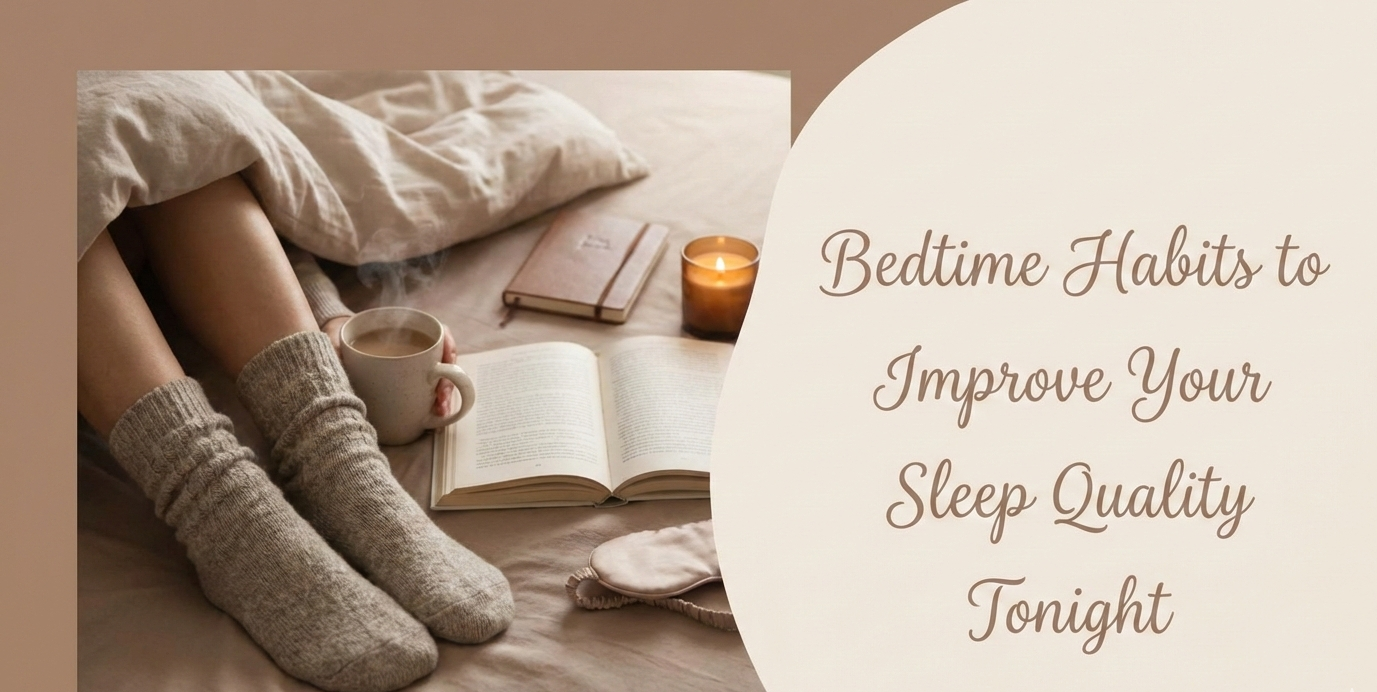
5 Bedtime Habits to Improve Your Sleep Quality Tonight
Tossing and turning? Your sleep problems likely start hours before your head hits the pillow. Discover the science-backed routine to wake up energized.
Why “Trying” to Sleep Doesn’t Work
Sleep is a performance activity. Just like an athlete warms up before a game, your brain needs a cooldown period to transition from “alert mode” to “rest mode.” Most of us, however, do the opposite: we doom-scroll until our eyes burn, then expect to fall asleep instantly.
If you are struggling with productivity during the day, the root cause is often your night routine. It is foundational to self-care for busy professionals. When you reclaim your night, you reclaim your morning.
The cruel irony of sleep is that the harder you try to force it, the more elusive it becomes. This phenomenon—called “sleep effort” in sleep science—creates a feedback loop: anxiety about not sleeping raises cortisol, which further suppresses the biological processes that initiate sleep, which creates more anxiety. Understanding this mechanism is the first step to breaking it. Sleep is not achieved through willpower; it is enabled through preparation.
Here are five proven habits you can start tonight to fix your sleep hygiene, followed by the deeper science and strategies that will help you understand why each one works.
The Science of Sleep: What Actually Happens at Night
Before changing your sleep habits, it helps to understand what your brain and body are actually doing during those eight hours. Sleep is not a passive state of unconsciousness—it is a dynamic, cyclical biological process as complex and essential as any waking activity.
The Sleep Cycle
Sleep unfolds in cycles of approximately 90 minutes, typically repeating four to six times per night. Each cycle contains four distinct stages:
- Stage 1 (NREM 1): Light sleep. The transition between wakefulness and sleep. Lasts just a few minutes. Easy to wake from—this is when you might experience a hypnic jerk (the sudden falling sensation).
- Stage 2 (NREM 2): True sleep onset. Heart rate slows, body temperature drops, brain activity produces characteristic “sleep spindles.” About half of total sleep time is spent here.
- Stage 3 (NREM 3 / Deep Sleep / Slow-Wave Sleep): The most physically restorative stage. Growth hormone is released, immune system is repaired, muscles recover, and memories consolidate. Hardest to wake from. Dominates the first half of the night.
- Stage 4 (REM): Rapid Eye Movement sleep. The brain is highly active—nearly as active as waking. Dreams occur here. Emotional processing, creativity, and complex learning are supported by REM. Dominates the second half of the night.
Why the Timing of Sleep Matters
Because deep sleep (NREM 3) dominates the first half of the night and REM dominates the second half, cutting sleep short by even one to two hours disproportionately reduces REM sleep—the stage critical for mood regulation, creativity, and emotional processing. This is why a “short” night often feels worse emotionally than physically, and why sleeping until your natural wake time (rather than an alarm) when possible provides outsized cognitive and emotional benefit.
Circadian Rhythm: Your Internal Clock
Your circadian rhythm is a roughly 24-hour biological cycle governed primarily by light exposure. The suprachiasmatic nucleus (SCN) in your hypothalamus acts as the master clock, coordinating the release of hormones that regulate alertness and sleep. Cortisol (alertness hormone) peaks in the morning and declines through the day. Adenosine (sleep pressure chemical) builds steadily throughout waking hours. Melatonin (sleep hormone) rises in dim light and peaks around midnight. Understanding these three systems—and how your habits interact with them—is the foundation of all effective sleep hygiene.
Sleep Pressure: The Adenosine System
Every hour you are awake, your brain accumulates adenosine—a chemical byproduct of neural activity that creates “sleep pressure,” the physical drive to sleep. After 16 hours of wakefulness, this pressure is high enough to make sleep easy and deep. Caffeine works by blocking adenosine receptors, temporarily masking sleep pressure without eliminating it. When caffeine wears off, the accumulated adenosine floods the receptors all at once—explaining the caffeine “crash.” Napping reduces adenosine. Alcohol disrupts the system by fragmenting sleep stages. The habits in this guide work, in part, by allowing adenosine to build naturally and not interfering with its ability to do its job.
1. The “Digital Sunset”: Reduce Screen Time
Our biological clock, or circadian rhythm, is regulated by light. Blue light emitted by phones and laptops tricks your brain into thinking it is still noon, suppressing the production of melatonin (the sleep hormone).
The Habit Shift
Set a hard rule: No screens 60 minutes before bed. If that feels impossible, start with 30 minutes. Replace the scroll with a book or journaling.
The Specific Mechanism: Why Blue Light is the Problem
Not all light suppresses melatonin equally. The intrinsically photosensitive retinal ganglion cells (ipRGCs) in your eyes are maximally sensitive to short-wavelength blue light (around 480 nanometers)—exactly the wavelength that LED screens, energy-efficient bulbs, and fluorescent lighting emit most strongly. Exposure to even relatively low levels of blue light in the two hours before bed can delay melatonin onset by 90 minutes to two hours and reduce total melatonin production by up to 50%. This is not a minor inconvenience—it is a significant hormonal disruption that directly delays sleep onset and reduces deep sleep quality.
Practical Screen Reduction Strategies
- Blue light blocking glasses: Amber-tinted glasses that block the specific wavelengths most disruptive to melatonin. Research shows these can meaningfully reduce blue light’s sleep disruption even when screens are still in use.
- Night mode / warm display settings: iOS Night Shift, Android Night Light, and f.lux (for computers) shift screen color temperature toward warmer amber tones. These reduce but do not eliminate the blue light problem.
- Charge your phone outside the bedroom: The phone in the bedroom creates a gravitational pull toward checking it. Removing it entirely eliminates the temptation and makes the bedroom a screen-free zone.
- E-ink readers: Devices like the Kindle Paperwhite (with warm light mode) or reMarkable Paper Pro emit significantly less blue light than backlit LCD screens, making them a much better alternative for late-night reading.
Struggling to put the phone down? Read our guide on simple ways to reduce screen time.
Protect Your Eyes

Can’t avoid screens entirely? These glasses block the harmful spectrum that keeps you awake.
Check Price on Amazon2. Brain Dumping: Clear the Mental Clutter
Do you lay in bed replaying embarrassing moments or worrying about tomorrow’s to-do list? This is often called “bedtime anxiety.” The solution is to get the thoughts out of your head and onto paper.
Spend 5 minutes writing down everything you need to do tomorrow. This closes the “open loops” in your brain, allowing it to relax. This technique is a core part of stopping overthinking.
Types of Bedtime Journaling
Not all journaling serves sleep equally. Matching the journaling type to your specific type of bedtime mental noise produces the best results.
To-Do List Dump
Best for planning anxiety. Write everything you need to do tomorrow. Closes cognitive “open loops.”
Worry Journaling
Best for generalized anxiety. Write worries and one possible action for each. Converts rumination into problem-solving.
Gratitude Journal
Best for stress and low mood. Write three specific things you are grateful for. Shifts brain focus from threat to appreciation.
Free Writing
Best for general mental noise. Write continuously for five minutes without editing. Empties working memory before sleep.
The “Worry Window” Technique
If intrusive worrying thoughts persist despite journaling, the “Worry Window” technique provides a structured solution. Earlier in the evening—not at bedtime—dedicate a specific 20-minute block (your “worry window”) to deliberately thinking through your concerns, writing them down, and identifying what is and is not within your control. When worries arise at bedtime, you tell yourself: “I already processed this. I have a plan. I can rest now.” Over time, the brain learns that worrying at bedtime is unnecessary because the worry window already exists. This is the same behavioral technique recommended in evidence-based treatment for chronic anxiety and insomnia.
3. Optimize Your Environment (Cool & Dark)
Your body temperature needs to drop by about 2–3 degrees Fahrenheit to initiate sleep. If your room is too hot, your body struggles to reach deep sleep stages. The ideal bedroom temperature is around 65°F (18°C).
Additionally, even a tiny LED light from a TV standby mode can disrupt sleep quality. Total darkness is non-negotiable for optimal melatonin production.
Temperature: The Most Underrated Sleep Factor
Core body temperature follows a circadian pattern: it peaks in late afternoon and begins a natural decline in the evening, reaching its lowest point around 4–5 AM. This temperature drop is not just correlated with sleep—it is causally necessary. The body initiates sleep partly by dissipating heat through the extremities (which is why your hands and feet often feel warm right before sleep). A hot bedroom impedes this process, particularly disrupting deep NREM sleep where the most physical restoration occurs. Strategies beyond air conditioning include cooling mattress pads, breathable linen bedding, sleeping with feet uncovered, and a warm shower or bath 60–90 minutes before bed (which paradoxically helps by triggering peripheral vasodilation that accelerates core cooling).
Light: Darkness as a Biological Signal
Beyond blue light from screens, the general light level in your environment matters enormously. Research shows that even 10 lux of light exposure (roughly equivalent to a dim night light) suppresses melatonin in light-sensitive individuals. The bedroom should be dark enough that you genuinely cannot see your hand in front of your face. Blackout curtains are the most effective solution for street light and early morning light intrusion. For travel or rented spaces, a high-quality sleep mask provides a portable alternative.
Sound: Managing Acoustic Disruption
Sound is one of the most disruptive environmental sleep factors, particularly for light sleepers and those in urban environments. The problem is not consistent ambient sound—it is sound changes. The brain’s auditory system remains partially active during sleep specifically to detect threat-related acoustic events. Sudden sounds (a car horn, a door slamming) trigger arousal responses even without full awakening, fragmenting sleep architecture. White noise works by masking these sudden acoustic events with a consistent baseline, effectively reducing the brain’s “signal detection” workload. Research on white noise for sleep improvement in noisy urban environments shows significant reductions in sleep latency and nighttime awakening frequency.
Related: Want to make your space more inviting? Check out how to make your living room cozy and apply those principles to your bedroom.
Total Darkness, Guaranteed

Blackout curtains are expensive. A high-quality silk sleep mask is the cheaper, portable alternative.
Check Price on Amazon4. Controlled Caffeine Intake
Caffeine has a half-life of about 5–6 hours. This means if you drink a coffee at 4 PM, half of that caffeine is still in your system at 10 PM. It blocks adenosine receptors, preventing you from feeling the “sleep pressure” that makes sleep easy and deep.
Switch to decaf or herbal tea after 2 PM. If you love warm beverages, explore alternatives. We compared matcha vs. coffee caffeine content to help you make smarter choices.
The Hidden Caffeine Sources
Most people track their coffee intake but miss the other sources of caffeine that compound the problem. Significant caffeine is found in black tea (25–50mg per cup), green tea (15–30mg), most commercial energy drinks (80–200mg), dark chocolate (20–60mg per 100g bar), pre-workout supplements (150–300mg), certain pain relievers (like Excedrin, which contains 65mg per tablet), and many sodas. A person who drinks one afternoon coffee, a square of dark chocolate after dinner, and an Advil PM for pain may be consuming 200mg+ of caffeine past 3 PM without realizing it.
Individual Caffeine Sensitivity
Caffeine metabolism varies dramatically between individuals due to differences in the CYP1A2 enzyme, which is responsible for caffeine breakdown. “Fast metabolizers” process caffeine quickly—they can drink coffee at 6 PM and sleep fine by 10 PM. “Slow metabolizers” (a significant minority of the population) may need to stop caffeine consumption by noon to avoid sleep disruption. Genetics, not willpower or habit, determines your metabolic rate. If you feel particularly sensitive to caffeine, this is the likely explanation.
⚠️ The Caffeine “Nap Loan” Problem
Using caffeine to push through afternoon tiredness solves the immediate problem but creates a debt: the adenosine that caffeine blocked is still waiting when the caffeine wears off. The tiredness returns, often harder than before. Using caffeine to mask genuine sleep deprivation is borrowing against tomorrow’s energy—a loan with a compounding interest rate.
5. Consistency is King
The most boring advice is the most effective: go to bed and wake up at the same time every day, even on weekends. This trains your body to release melatonin and cortisol at precisely the right times, making falling asleep and waking up feel effortless rather than forced.
Building this consistency is one of the top habits of highly effective people. It stabilizes your energy levels throughout the day, reduces dependence on alarms, and eliminates the “social jet lag” that affects the majority of working adults.
Social Jet Lag: The Weekend Sleep Problem
Social jet lag refers to the discrepancy between your weekday sleep schedule and your weekend sleep schedule. Most people stay up one to two hours later on Fridays and Saturdays and sleep in correspondingly on Saturdays and Sundays. The result is a biological equivalent of flying west by one time zone every weekend and east by one time zone every Monday—a regular disruption to the circadian rhythm that accumulates negative health effects similar to those of actual shift work. Research associates chronic social jet lag with higher rates of obesity, metabolic syndrome, depression, and reduced cognitive performance even independent of total sleep duration.
How to Anchor Your Wake Time
Sleep specialists universally agree that the wake time, not the bedtime, is the most important anchor for circadian rhythm stability. Bedtime naturally adjusts when wake time is consistent—if you wake at 6:30 AM every day, your sleep pressure will be sufficient to fall asleep at 10:30 or 11 PM. The reverse does not work reliably: trying to enforce a bedtime without a consistent wake time produces frustration. On weekends, allow yourself at most a one-hour sleep-in—enough to catch up without significantly disrupting your rhythm.
Building Your Full Wind-Down Routine
The five habits above are most powerful when integrated into a coherent pre-sleep routine. A wind-down routine functions as a behavioral cue—a sequence your nervous system learns to associate with sleep onset, eventually triggering physiological preparation for sleep even before you get into bed.
The Ideal Wind-Down Timeline
- Three hours before bed: Finish your last substantial meal. Heavy digestion competes with the physiological cooling needed for sleep onset.
- Two hours before bed: Dim the lights in your home. Use warm-spectrum bulbs or lamps rather than overhead lighting. Begin winding down stimulating activity (exercise, intense work, difficult conversations).
- One hour before bed: Digital Sunset begins. Put the phone down. Begin your wind-down ritual: journaling, light reading, stretching, or a warm bath.
- Thirty minutes before bed: Prepare the bedroom—set the temperature, ensure complete darkness, turn on white noise if needed.
- Bedtime: Get into bed only when sleepy, not just tired. Avoid using the bed for anything other than sleep and sex—this maintains the brain’s association between bed and sleep (stimulus control therapy).
Reading as a Wind-Down Activity
Reading—specifically physical books or e-ink readers in warm light—is one of the most effective pre-sleep activities because it occupies the narrative-seeking part of the brain (preventing it from generating its own anxious narratives) while being sufficiently passive to allow the physiological processes of sleep preparation to proceed. A 2009 study by the University of Sussex found that six minutes of reading reduced participants’ stress levels by 68%, more than listening to music or taking a walk. Fiction performs better than non-fiction for pre-sleep reading, as it is less likely to activate planning or problem-solving thinking.
Stretching and Yoga for Sleep
Gentle stretching activates the parasympathetic nervous system—the “rest and digest” counterpart to the stress-triggering sympathetic system. Specific poses with documented sleep benefits include legs-up-the-wall (Viparita Karani), child’s pose (Balasana), supine spinal twist, and the 4-7-8 breathing exercise (inhale for 4 counts, hold for 7, exhale for 8). A 10-minute gentle yoga routine before bed can measurably reduce cortisol and lower heart rate variability in a direction associated with sleep readiness.
Sleep Nutrition: Foods That Help and Hurt
What you eat in the hours before bed directly influences your sleep architecture. The relationship between nutrition and sleep operates through multiple pathways: blood sugar stability, digestive load, neurotransmitter synthesis, and body temperature regulation.
Foods That Support Sleep
- Tart cherries: One of the few foods with naturally occurring melatonin. Tart cherry juice has been shown in clinical trials to increase sleep duration and efficiency.
- Kiwi fruit: A 2011 study found that eating two kiwis one hour before bedtime for four weeks improved sleep onset, duration, and efficiency. The mechanism may involve kiwi’s high serotonin content and antioxidant properties.
- Fatty fish (salmon, mackerel): Rich in omega-3 fatty acids and vitamin D, both of which support serotonin production. Eating fatty fish three times per week is associated with better sleep quality in research studies.
- Turkey and other tryptophan-rich foods: Tryptophan is an amino acid precursor to serotonin and melatonin. Pairing tryptophan-rich foods with a small amount of complex carbohydrate (whole grain crackers, for instance) facilitates tryptophan’s crossing of the blood-brain barrier.
- Warm milk: The old advice has partial scientific backing—milk contains tryptophan and magnesium, and the ritual of a warm beverage may support the wind-down association.
- Chamomile tea: Contains apigenin, a compound with mild anxiolytic (anxiety-reducing) effects through GABA receptor binding. Chamomile tea regularly appears in sleep research with modest but consistent positive effects.
Foods and Habits That Hurt Sleep
- Alcohol: The single most misunderstood sleep disruptor. While alcohol’s sedative properties make falling asleep easier, it fragments sleep architecture by suppressing REM sleep and causing rebound wakefulness in the second half of the night as it metabolizes. Regular “nightcap” use worsens overall sleep quality despite improving sleep onset.
- Spicy or acidic foods: Can cause acid reflux that worsens when lying down, disrupting sleep continuity.
- High-glycemic carbohydrates: Cause blood sugar spikes and subsequent crashes that can trigger nighttime awakening as the body responds to low blood sugar.
- Large meals within two hours of bed: Require active digestion that raises core body temperature and metabolic activity, both counterproductive to sleep initiation.
Exercise and Sleep: Finding the Right Balance
Exercise is one of the most powerful non-pharmacological sleep interventions available. Regular physical activity consistently produces improvements in sleep onset, sleep duration, and deep sleep quality across research populations. The key variable is timing.
Morning Exercise and Cortisol
Morning exercise—particularly outdoors in natural light—produces a powerful circadian-anchoring effect. Bright morning light exposure (even on a cloudy day) sets the circadian clock forward, advancing the evening melatonin rise and making it easier to fall asleep at a reasonable time. This makes a morning walk, run, or cycle one of the highest-leverage sleep interventions available, particularly for those who struggle with falling asleep.
Evening Exercise: The Nuanced Truth
The conventional wisdom that evening exercise disrupts sleep is more nuanced than often presented. High-intensity cardio within two hours of bed does raise core body temperature and cortisol in ways that can delay sleep onset in some individuals. However, moderate-intensity evening exercise (strength training, yoga, a brisk walk) typically does not disrupt sleep and may improve it. Individual variation is significant: some people sleep better after evening workouts, others worse. The practical recommendation is to observe your own response over two weeks rather than applying a blanket rule.
Stress and Anxiety as Sleep Disruptors
Stress and sleep have a bidirectional relationship: poor sleep worsens stress resilience, and high stress impairs sleep quality. Breaking this cycle requires addressing both ends simultaneously.
The Cortisol-Sleep Connection
Cortisol, the primary stress hormone, is biologically antagonistic to melatonin. When cortisol is elevated—due to work pressure, relationship conflict, financial anxiety, or even low-grade chronic stress—melatonin production is suppressed and the sympathetic nervous system (fight-or-flight mode) remains activated, making sleep initiation physiologically difficult regardless of how tired you feel. This is why chronically stressed individuals often report “tired but wired” syndrome: exhausted but unable to sleep.
Cognitive Behavioral Therapy for Insomnia (CBT-I)
CBT-I is the gold-standard treatment for chronic insomnia, consistently outperforming sleep medication in research with longer-lasting effects and no side effects or dependency risk. CBT-I includes several components: sleep restriction therapy (temporarily reducing time in bed to consolidate sleep), stimulus control (reassociating bed with sleepiness rather than wakefulness), cognitive restructuring (challenging unhelpful beliefs about sleep), relaxation training, and sleep hygiene education. Many CBT-I techniques can be self-administered using workbooks or apps like Sleepio, which has clinical trial evidence supporting its effectiveness.
If bedtime anxiety and racing thoughts are your primary sleep obstacle, read our comprehensive guide on how to stop overthinking everything.
Natural Sleep Supplements: What Works (and What Doesn’t)
The supplement market is saturated with sleep products making extravagant claims. Here is an evidence-based breakdown of what the research actually supports.
| Supplement | Evidence Level | Best Use Case | Notes |
|---|---|---|---|
| Melatonin | Strong | Jet lag, shift work, delayed sleep phase | Effective for resetting circadian timing; less effective for sleep quality per se. Lower doses (0.5–1mg) often more effective than high doses (5–10mg). |
| Magnesium Glycinate | Moderate | Anxiety-related insomnia, muscle tension | Supports GABA activity and muscle relaxation. Glycinate form is best tolerated. 200–400mg before bed. |
| L-Theanine | Moderate | Racing thoughts, stress-related sleep difficulty | Amino acid found in green tea. Promotes relaxation without sedation. Often paired with magnesium. |
| Ashwagandha | Moderate | Chronic stress and cortisol elevation | Adaptogen with consistent cortisol-lowering effects. Improves sleep quality indirectly by reducing physiological stress response. |
| Valerian Root | Weak–Moderate | Mild insomnia | Mixed research results. May require several weeks of consistent use for effect. Generally well tolerated. |
| CBD | Preliminary | Anxiety-related sleep issues | Promising early data but high product quality variability and limited large-scale clinical trials. Consult a healthcare provider. |
⚠️ The Supplement Caveat
No supplement addresses the root behavioral causes of poor sleep. Supplements are tools to support a good sleep foundation—not substitutes for it. If you are relying on supplements nightly without addressing sleep hygiene basics, the supplement is treating symptoms rather than causes. Always consult a healthcare provider before starting any supplement regimen, particularly if you take other medications.
Common Sleep Disorders and When to Seek Help
Sleep hygiene improvements resolve the vast majority of garden-variety sleep difficulties. But some sleep problems have underlying causes that behavioral changes alone cannot fix. Recognizing these is important.
Sleep Apnea
Sleep apnea—where breathing repeatedly stops and starts during sleep—is one of the most common and most underdiagnosed sleep disorders, affecting an estimated 25% of adult men and 10% of adult women. It causes severe sleep fragmentation (the brain briefly wakes each time breathing stops to restore airway muscle tone) and produces characteristic symptoms: loud snoring, gasping or choking during sleep (reported by a partner), morning headaches, daytime fatigue despite adequate sleep duration, and difficulty concentrating. It is strongly associated with obesity but can affect any body type. Untreated sleep apnea significantly increases cardiovascular risk. If these symptoms sound familiar, home sleep testing kits are now widely available, and CPAP therapy is highly effective.
Restless Legs Syndrome (RLS)
RLS causes an irresistible urge to move the legs, typically in the evening and at rest, temporarily relieved by movement. It disrupts sleep onset and can cause significant distress. RLS is associated with iron deficiency, pregnancy, kidney disease, and certain medications. A simple blood test to check ferritin levels is the first step for anyone experiencing RLS symptoms, as iron supplementation resolves symptoms in many cases where ferritin is low.
Chronic Insomnia Disorder
Insomnia is defined as difficulty falling asleep, staying asleep, or waking too early at least three nights per week for at least three months, accompanied by daytime functional impairment. Chronic insomnia affects approximately 10–15% of adults and is unlikely to resolve with sleep hygiene alone—it requires CBT-I or medical evaluation. If you have been struggling with sleep for more than three months despite consistent implementation of sleep hygiene principles, professional evaluation is warranted.
Tracking Your Sleep
Should you use technology to help you sleep, or ditch it entirely? The answer is nuanced.
| Method | Pros | Cons |
|---|---|---|
| Sleep Apps (Calm/Headspace) | Excellent guided meditations and sleep stories. Well-researched content. | Requires phone near bed. Screen use before and during sleep. |
| Wearable Trackers (Oura, Fitbit, Apple Watch) | Tracks sleep stages, heart rate variability, body temperature trends. Provides long-term data patterns. | Consumer-grade accuracy for sleep staging varies. Can create anxiety about sleep scores (orthosomnia). |
| White Noise Machine | Zero screen time. Consistent masking of disruptive sounds. Simple and effective. | Single function. Less portable than a phone app. |
| Weighted Blanket | Deep pressure stimulation reduces anxiety and cortisol. No technology required. | Heat retention can be problematic for warm sleepers. |
| Reading Physical Books | Best for eye relaxation. No blue light. Strong evidence for stress reduction. | Requires a reading light (warm spectrum recommended). |
| Sleep Journal (Paper) | No technology. Forces reflection on patterns. No algorithm-generated anxiety. | No automatic data collection. Requires discipline to maintain. |
Orthosomnia: When Tracking Backfires
A phenomenon called “orthosomnia” has emerged alongside consumer sleep trackers—where people become so focused on achieving a perfect sleep score that the anxiety about their sleep data actually worsens their sleep. If you find yourself lying in bed worried about tonight’s Oura ring score, it is worth taking a break from tracking and returning to qualitative self-assessment. The goal is good sleep, not a good data visualization.
Check out our detailed comparison of Headspace vs. Calm vs. Insight Timer for more on sleep apps.
The Perfect Sleep Environment Setup
Your bedroom environment is the physical infrastructure of your sleep. Small investments in the right environment improvements often yield disproportionately large sleep quality gains.
The Essential Bedroom Checklist
🌡️ Temperature
- Target 65°F (18°C) ambient temperature
- Breathable linen or cotton bedding
- Cooling mattress topper for hot sleepers
- Feet-uncovered sleep if overheating is an issue
🌑 Light
- Blackout curtains or high-quality sleep mask
- All LED standby lights covered or removed
- Warm-spectrum bedside lamp (below 3000K)
- No screens or phones in the bedroom
🔊 Sound
- White or brown noise machine for urban environments
- Earplugs for partner snoring or thin walls
- Consistent ambient sound level (avoid silence + intermittent noise)
- Fan as dual-purpose temperature and sound tool
🛏️ Bedding
- Pillow height matched to sleep position (higher for side sleepers)
- Mattress replaced every 8–10 years or when showing wear
- Weighted blanket (7–12% of body weight) for anxiety
- Reserve bed for sleep only—never work or scroll
Scent: Aromatherapy for Sleep
The olfactory system has a direct neural connection to the limbic system—the brain’s emotional and memory center—making scent one of the fastest routes to physiological state change. Lavender essential oil has the most robust research support for sleep: studies consistently show that lavender aromatherapy reduces anxiety, lowers heart rate, and improves sleep quality scores. Roman chamomile and bergamot are also supported by preliminary evidence. A diffuser with lavender oil, or lavender spray on the pillow, costs little and provides a meaningful sensory cue that the brain learns to associate with sleep readiness.
Napping Strategy: The Science of the Power Nap
Napping is a deeply contested territory in sleep science. Done correctly, a nap is one of the most effective performance tools available. Done incorrectly, it sabotages nighttime sleep and creates a dependency cycle.
The Optimal Nap Duration
Nap duration determines what sleep stages you enter—and their consequences for how you feel on waking and how you sleep that night.
- 10–20 minutes (“Power Nap”): The gold standard. You enter Stage 1 and early Stage 2 sleep only. Waking is easy, and you emerge refreshed, alert, and cognitively enhanced without sleep inertia or nighttime sleep disruption. Research shows a 10–20 minute nap improves alertness, reaction time, and mood for two to three hours.
- 30 minutes: Risk zone. You may enter deeper Stage 2, making waking difficult and producing significant sleep inertia (grogginess) lasting 15–30 minutes post-wake.
- 60 minutes: Includes slow-wave sleep. Produces substantial sleep inertia but provides memory consolidation benefits. Best for creative or learning recovery situations where immediate alertness is not required.
- 90 minutes: A full sleep cycle. Includes REM sleep. Minimal sleep inertia (you wake naturally at cycle completion). Equivalent to a mini night’s sleep for cognitive restoration but takes meaningful sleep pressure off the evening, delaying nighttime sleep onset.
The “Caffeine Nap” Technique
One of the most counterintuitive and well-validated sleep research findings: drinking a cup of coffee immediately before a 20-minute nap produces better alertness on waking than either caffeine or a nap alone. The mechanism: caffeine takes approximately 20–30 minutes to enter the bloodstream and block adenosine receptors. The nap clears accumulated adenosine during that window. When you wake, both effects operate simultaneously—reduced adenosine baseline plus caffeine blocking further accumulation. The “caffeine nap” is a legitimate, research-backed technique widely used by emergency medical professionals, military personnel, and long-haul drivers.
When Not to Nap
Napping after 3 PM carries significant risk of nighttime sleep disruption by reducing the adenosine-based sleep pressure needed for easy sleep onset that evening. If you are already struggling with insomnia or delayed sleep phase, napping should generally be avoided entirely during the behavioral intervention period—maintaining full sleep pressure for bedtime accelerates the consolidation of sleep patterns. Once your nighttime sleep is stable, strategic napping can be reintroduced if needed.
Frequently Asked Questions
How many hours of sleep do I really need?
Most adults need between 7 to 9 hours. However, quality matters more than quantity. Seven hours of deep, uninterrupted sleep is better than nine hours of fragmented rest. Sleep need is also genetically influenced—a genuine subset of the population (less than 3%) are “short sleepers” who function optimally on six hours, but most people who believe they are short sleepers are actually chronically sleep-deprived and habituated to impairment.
Does exercising at night hurt sleep?
High-intensity cardio right before bed can raise cortisol and body temperature, making it hard to sleep for some individuals. However, moderate evening exercise does not disrupt sleep for most people and may improve it. Gentle stretching or yoga is beneficial and actually aids sleep onset. The best approach is to observe your own response over two weeks. See our comparison of Pilates vs. Yoga for low-impact options.
Why do I wake up tired even after 8 hours?
This is most commonly due to sleep inertia (waking during deep sleep), poor sleep quality caused by alcohol or blue light disruption, undiagnosed sleep apnea (which fragments sleep without full awakening), or chronic sleep deprivation that requires weeks of recovery rather than a single good night. If the problem persists despite good sleep hygiene, consult a sleep specialist and consider an at-home sleep study to rule out sleep apnea.
Is melatonin safe to take every night?
Melatonin is generally safe for short-term use to reset your circadian clock (jet lag, shift work). Long-term nightly use is less well studied, and there is theoretical concern that exogenous melatonin may downregulate your body’s natural production over time. The most effective doses for most applications are much lower than commonly sold (0.5–1mg rather than 5–10mg). Consult a doctor for chronic sleep issues—melatonin treats circadian timing problems, not sleep quality problems.
What is the best sleeping position for sleep quality?
Side sleeping is generally considered the healthiest position for most adults—it supports natural spinal alignment, reduces acid reflux risk, and is the position in which sleep apnea is least severe. Left-side sleeping specifically may benefit heart function and reduce acid reflux. Back sleeping is good for spinal alignment but worsens snoring and sleep apnea. Stomach sleeping creates spinal stress and should generally be avoided. Pillow selection is critical—side sleepers need a thicker pillow to fill the gap between shoulder and ear.
How long does it take to fix your sleep schedule?
Consistent sleep hygiene changes typically produce noticeable improvement within one to two weeks, with full benefit emerging over three to four weeks. The circadian rhythm adapts at approximately one hour per day under ideal conditions (consistent wake time, morning light exposure, no late-night light disruption). If you are trying to advance your sleep schedule (go to bed and wake earlier), using bright light immediately on waking and avoiding evening light accelerates the process. Expect gradual improvement rather than overnight transformation.
Does alcohol help you sleep?
No—alcohol harms sleep quality despite improving sleep onset. While alcohol’s sedative properties make falling asleep faster, it suppresses REM sleep in the first half of the night and causes rebound wakefulness and light sleep in the second half as it metabolizes. The result is that alcohol-assisted sleep produces less total REM and deep sleep than sober sleep, and more fragmentation. Regular “nightcap” use consistently worsens sleep quality over time and is associated with dependence on alcohol for sleep initiation.
Final Thoughts: Start Tonight
You don’t need to overhaul your entire life to sleep better. Pick just one of these habits—maybe the “Digital Sunset”—and try it tonight. The clarity and energy you feel tomorrow morning will be all the motivation you need to keep going.
Sleep is not a passive state you fall into by accident. It is the deliberate product of what you do in the hours before bed: the light you see, the thoughts you process, the substances you consume, and the environment you create. Every one of those variables is within your control. That is the most empowering fact in sleep science—most sleep problems are behavioral problems, which means most sleep problems are solvable.
Once you have mastered your night, make sure you have a plan for the morning. Read our guide on 5 morning routine checklists for success to complete the cycle.
Upgrade Your Sanctuary:
Invest in pillows that support your neck properly.